
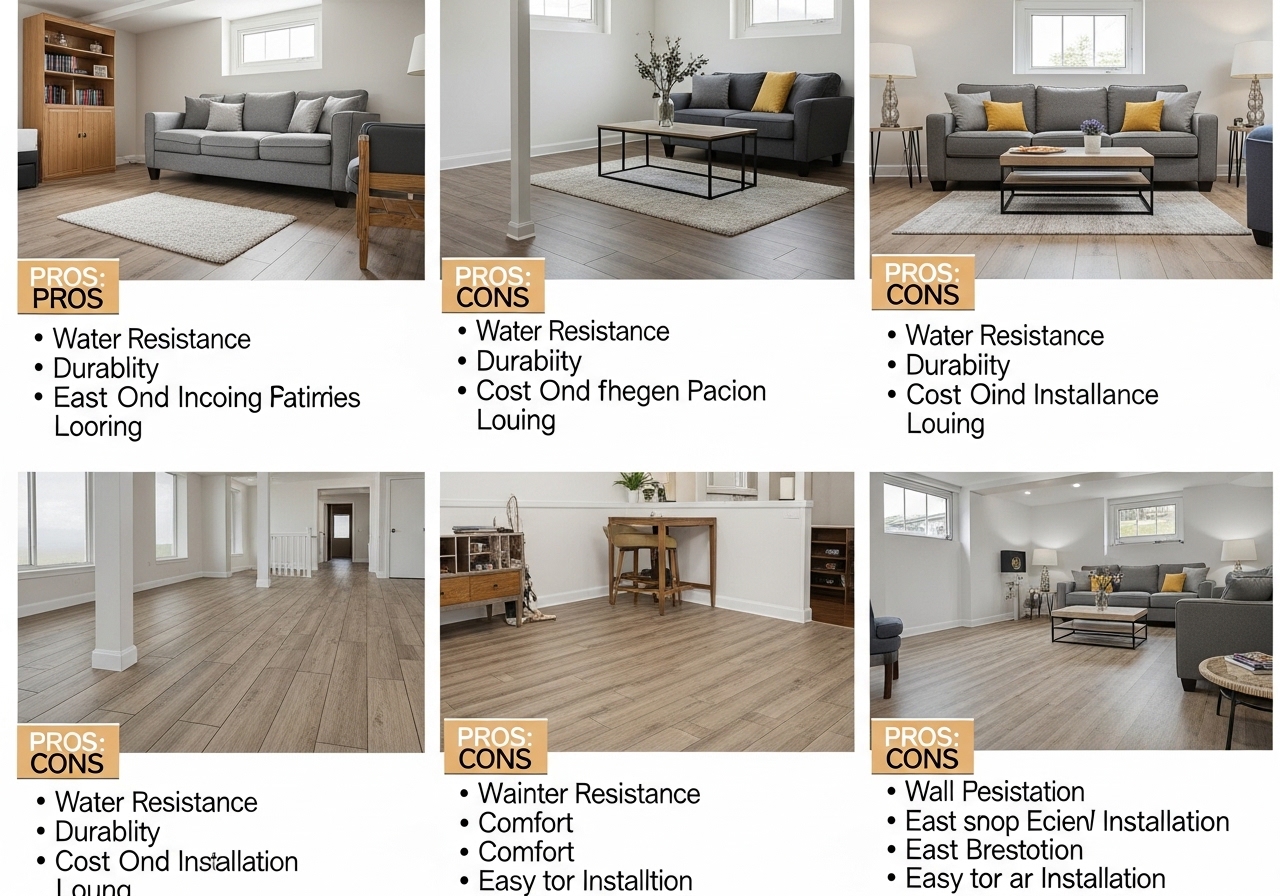
If you’re planning to finish your basement in Ohio, one of the most important decisions you’ll make is choosing the right flooring. It sounds straightforward, but basements are a completely different environment compared to the rest of your home — and Ohio’s climate makes the stakes even higher. Cold winters, humid summers, and the ever-present risk of moisture seeping through concrete slabs all play a role in determining which flooring will last and which will warp, crack, or grow mold within a few years.
This guide walks you through the best flooring options for a finished basement in Ohio, explains what to watch out for with each choice, and helps you make an informed decision before you invest your time and money.
Why Ohio Basements Require Special Flooring Consideration
Ohio’s climate sits in a challenging middle zone — cold enough for significant ground freezing in winter and humid enough in summer to push moisture through basement walls and floors. Even a well-sealed basement in Stark County or Summit County can experience minor water intrusion during heavy rains or spring thaws.
This means your basement flooring needs to be:
- Moisture-resistant or waterproof
- Able to handle temperature fluctuations
- Comfortable underfoot in a cooler space
- Durable enough for everyday use
When homeowners skip this consideration and install the wrong type of flooring, they often find themselves dealing with buckled hardwood, peeling laminate, or musty carpet within a season or two. Getting it right the first time saves you significant time, money, and stress.
If you’re already working on or planning a full basement transformation, professional help makes a big difference. The team at K&K Construction offers comprehensive basement remodeling in Massillon, OH, and can help you evaluate every aspect of your project — from flooring selection to full finishing work.
The Top Flooring Options for Ohio Basements
1. Luxury Vinyl Plank (LVP) — The #1 Choice for Most Ohio Basements
Luxury vinyl plank has become the go-to flooring solution for finished basements across Ohio, and for good reason. LVP is 100% waterproof, incredibly durable, and comes in styles that convincingly mimic hardwood, stone, and tile — at a fraction of the cost.
Why it works in Ohio basements:
LVP sits directly on a concrete subfloor without requiring an additional moisture barrier in most cases (though adding one is still a smart move in older homes). It doesn’t swell when moisture levels rise, won’t warp under Ohio’s seasonal temperature swings, and can handle the cold concrete feel far better than materials like laminate.
Pros:
- Fully waterproof
- Comfortable and warmer underfoot than tile
- Easy to install and replace individual planks if damaged
- Wide range of design options
- Cost-effective compared to hardwood or stone
Cons:
- Can feel hollow underfoot without proper underlayment
- Not as premium-feeling as real hardwood
- May off-gas VOCs if cheaply made — choose high-quality brands
LVP is typically the first recommendation from experienced remodelers because it checks almost every box for a finished basement environment.
2. Ceramic or Porcelain Tile — Best for Wet Areas and High-Traffic Basements
Tile is one of the oldest and most reliable basement flooring options, especially for spaces that double as laundry rooms, home gyms, or hobby areas where spills and moisture are common.
Why it works in Ohio basements:
Ceramic and porcelain tile are completely impervious to water damage, and porcelain in particular is dense enough to resist freeze-thaw cycles — an important consideration in Ohio where a basement that isn’t fully conditioned can drop to near-freezing temperatures in deep winter.
Pros:
- Waterproof and stain-resistant
- Long-lasting with minimal maintenance
- Easy to clean
- Great for radiant floor heating systems
Cons:
- Cold and hard underfoot — area rugs are a must
- Grout lines can harbor mold if not properly sealed
- More expensive to install than LVP
- Cracking is possible if the concrete subfloor shifts
If you’re planning to add radiant heating to your basement — a popular upgrade in Ohio homes for comfort during those long winters — tile pairs beautifully with it and becomes one of the most comfortable flooring options available.
3. Engineered Hardwood — A Premium Option for Dry, Well-Sealed Basements
Homeowners who want the warmth and elegance of wood flooring in their finished basement often turn to engineered hardwood. Unlike solid hardwood, engineered hardwood uses a real wood veneer over a plywood core, which gives it better dimensional stability in changing humidity levels.
Why it might work in some Ohio basements:
If your basement is thoroughly waterproofed, climate-controlled, and you’ve tested for moisture consistently over multiple seasons, engineered hardwood can be a viable choice. It looks stunning and adds real resale value.
However — proceed with caution. Ohio’s climate still poses a real risk. Even with good waterproofing, the humidity fluctuations common in Stark County and surrounding areas can cause engineered hardwood to expand, contract, and eventually cup or gap over time.
Pros:
- Beautiful, premium aesthetic
- Adds warmth and resale value
- More stable than solid hardwood
Cons:
- Still susceptible to moisture damage
- More expensive than LVP or laminate
- Not recommended for basements with any history of water issues
- Requires a very dry, conditioned space
Our general recommendation: if you’re torn between LVP and engineered hardwood for your Ohio basement, choose LVP unless your basement has been bone-dry for years and is fully climate-controlled.
4. Epoxy Flooring — Ideal for Garage-Style or Utility Basements
Epoxy floor coatings have grown dramatically in popularity for Ohio basements that double as workshops, home gyms, or garage-adjacent utility spaces. Epoxy bonds directly to concrete and creates a hard, seamless, waterproof surface that’s easy to clean and highly durable.
Why it works in Ohio basements:
Epoxy seals the concrete itself, eliminating the worry about moisture seeping up through the slab. It handles temperature fluctuations better than most traditional flooring options and is virtually impervious to spills, chemicals, and heavy foot traffic.
Pros:
- Extremely durable and long-lasting
- Completely waterproof
- Easy to clean — great for gyms and workshops
- Resistant to stains, impacts, and chemicals
- Lower long-term maintenance cost
Cons:
- Hard and cold underfoot — not ideal for living spaces
- Can become slippery when wet — anti-slip additives are recommended
- Requires proper surface preparation for adhesion
- Not the most aesthetically “homey” option
Epoxy is rarely used in a finished basement meant for relaxation or entertainment, but it’s a fantastic choice if your basement serves a more utilitarian purpose.
5. Carpet — Cozy but Risky Without Proper Preparation
Carpet remains a popular choice for finished basements used as family rooms, home theaters, or bedrooms, and it’s easy to understand why. It’s warm, soft, affordable, and comfortable — everything that cold concrete isn’t. But in an Ohio basement, carpet comes with real risks that you need to manage carefully.
Why it can work — with the right setup:
Carpet traps moisture and can become a breeding ground for mold and mildew if it gets wet even once. That said, if your basement is fully waterproofed, well-ventilated, and you use a high-quality moisture barrier pad beneath the carpet, it can last for years without issue.
Pros:
- Warm and comfortable — great for bedrooms and entertainment rooms
- Budget-friendly
- Easy to install and replace
- Reduces echo and noise
Cons:
- Highly susceptible to moisture and mold
- Difficult to dry completely if flooded
- Holds allergens, pet dander, and odors
- Not recommended in Ohio basements with any moisture history
If you choose carpet for your finished basement, invest in a quality dehumidifier and commit to inspecting the perimeter walls and floor regularly. At the first sign of moisture, act quickly.
Factors to Consider Before Choosing Your Basement Flooring
Beyond the flooring material itself, several factors should guide your final decision for an Ohio basement:
Moisture testing: Before installing any flooring, tape a plastic sheet to your concrete floor and leave it for 24–48 hours. If condensation forms underneath, you have a moisture problem that needs to be addressed before any flooring goes down.
Subfloor condition: An uneven or cracked concrete subfloor will cause problems with any flooring material. Leveling compound or grinding may be needed before installation.
Ceiling height: Some flooring options — particularly those requiring a subfloor or thick underlayment — can reduce ceiling height in basements that already feel low. LVP and tile are the thinnest options.
Intended use: A basement home gym has very different flooring needs than a finished basement bedroom or home office. Match your flooring to how the space will actually be used.
Budget: Epoxy and LVP are the most cost-effective options. Tile and engineered hardwood cost more to purchase and install. Factor in the long-term cost of replacement if your choice isn’t moisture-resistant.
Whether you’re starting from scratch or renovating an existing space, it’s worth reviewing the full range of professional flooring services available in Massillon, OH to understand what installation, preparation, and finishing work is involved.
Don’t Forget: Flooring Is Just One Part of a Finished Basement
Choosing the right flooring is a critical step, but a finished basement is a whole-room project. Walls, ceilings, insulation, lighting, and moisture control all work together to create a space that’s comfortable, functional, and durable for Ohio’s climate.
For example, proper insulation beneath and around your basement is just as important as waterproof flooring. Without it, heat loss through your concrete slab will make even the best flooring feel cold and uncomfortable. The team at K&K Construction can handle insulation and energy efficiency upgrades in Massillon, OH as part of a comprehensive basement finishing project.
Similarly, drywall and wall finishing in a basement requires moisture-resistant materials and techniques that differ from above-grade rooms. If you need professional drywall installation and repair in Massillon, OH, working with a contractor who understands basement conditions is essential to avoiding mold and premature failure.
And once the structural elements are in place, interior details like trim, built-ins, and cabinetry can take your finished basement from functional to genuinely beautiful. Custom shelving, entertainment centers, and storage solutions can all be incorporated as part of the finishing phase. Explore the options for custom cabinetry and built-ins in Massillon, OH to see how far a finished basement can go.
Final Recommendation: What’s the Best Basement Flooring for Ohio Homes?
If you want one clear answer: Luxury Vinyl Plank (LVP) is the best all-around flooring for a finished basement in Ohio. It’s waterproof, durable, warm enough to be comfortable, affordable, and available in a wide range of styles. For most Ohio homeowners — whether in Massillon, Canton, Akron, or the Cleveland suburbs — LVP simply outperforms every other option when you factor in climate, moisture risk, and long-term value.
That said, the right choice for your basement depends on your specific conditions:
- Use LVP if you want the best balance of performance, style, and value.
- Use tile if your basement is a utility or wet area, or if you’re installing radiant heat.
- Use epoxy if your basement is a workshop, gym, or garage-style space.
- Use engineered hardwood only if your basement is impeccably dry and fully conditioned.
- Use carpet only if moisture is a non-issue and you prioritize comfort above all else.
Whatever direction you choose, working with experienced local contractors ensures the job is done right the first time. K&K Construction serves homeowners throughout Stark County, Summit County, and Cuyahoga County, bringing professional-grade craftsmanship to every basement finishing project. If you’re ready to move forward, reach out and get a full evaluation of your space — from flooring selection to complete finishing work — with a team that knows Ohio homes inside and out.