
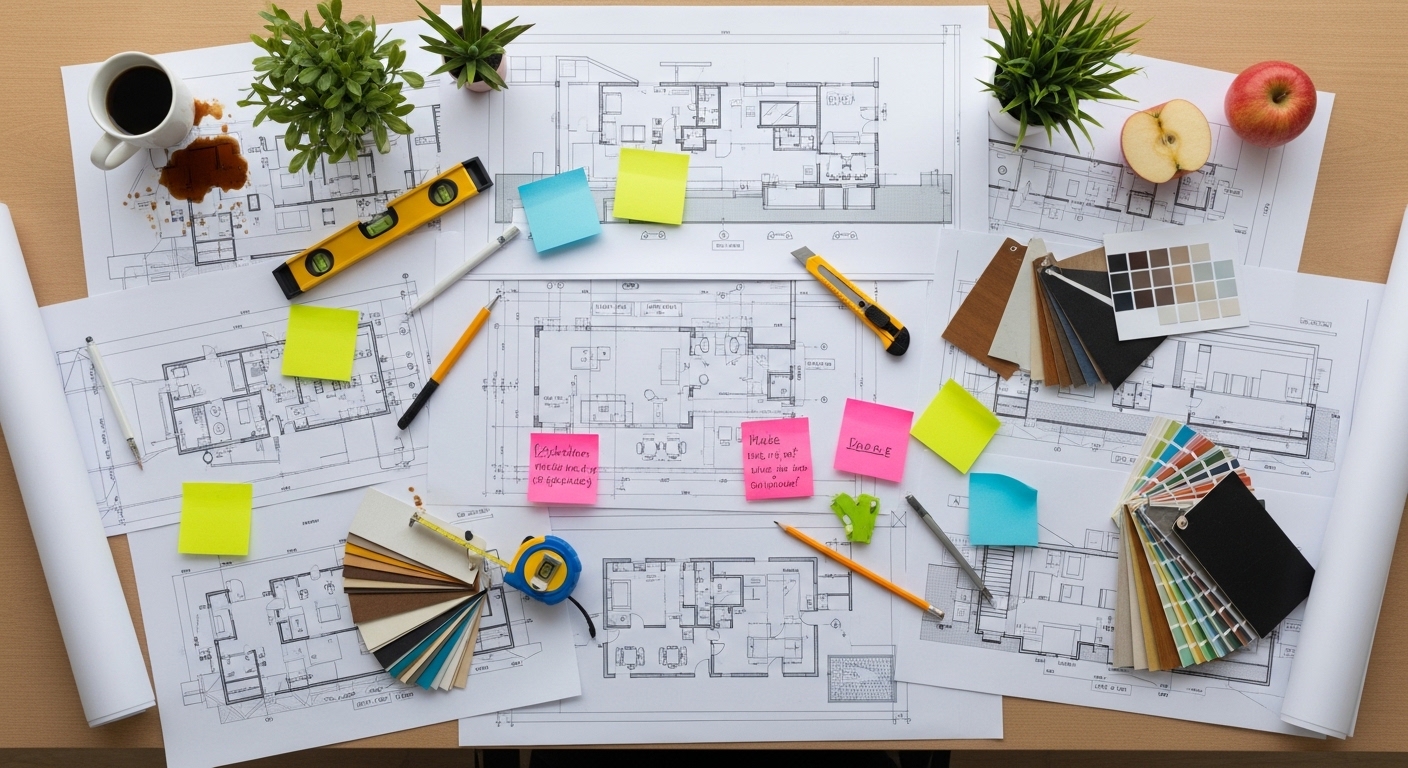
How to Plan an Office Renovation Without Disrupting Your Business
Nobody warns you about the middle part.
Everyone talks about the excitement of deciding to renovate — new layout, better lighting, a space that finally feels like the business you’ve built. And everyone eventually talks about the finish line: the Monday morning when you walk in and everything’s done and it’s exactly what you pictured.
But the middle? The weeks when half your office is under construction, your staff is trying to concentrate through the sound of power tools, your clients keep asking what’s going on, and you’re making decisions on the fly because something unexpected came up and the contractor needs an answer by noon?
That part nobody mentions.
And here’s the thing — it doesn’t have to be that chaotic. The businesses that get through office renovations without losing clients or key employees or significant revenue almost always did one thing differently: they planned the disruption before it happened, not in response to it.
This guide is about that. Not the fun design stuff (though we’ll get there) — the logistics and sequencing that make the difference between a renovation that temporarily inconveniences your team and one that genuinely derails your business for months.
If you’re somewhere in the early stages of thinking about an office space renovation, keep reading. This is the guide I’d want someone to hand me before I started.
Before You Do Anything: What You Need to Have in Place
There’s a version of this process that starts with picking finishes and ends with regret. Let’s not do that.
Before you talk to contractors, before you finalize a design, before you get excited about the new conference room — get clear on three things:
Your non-negotiables. What absolutely cannot be disrupted? Client-facing operations? Certain team functions? Phone systems? Whatever it is, write it down. This list becomes the constraint that shapes every other decision.
Your actual timeline. Not the timeline you want — the timeline that accounts for slow seasons, client commitments, lease renewals, and how long your team can realistically work in a compromised environment. Be honest here. Wishful thinking about timelines is one of the biggest sources of renovation stress.
Your decision-making process. Renovations generate a lot of decisions, fast. If every call has to go through three layers of approval, the project slows down, costs can creep up, and your contractor gets frustrated. Designate one person internally who can make real-time calls. That person needs actual authority, not just a title.
Get those three things sorted before your first contractor meeting. You’ll save everyone time.
Step 1: Audit What You’re Actually Working With
[IMAGE: A floor plan sketch with color-coded zones — active work areas, renovation areas, and buffer zones clearly marked]
This sounds obvious, but most businesses skip it or do it too quickly. Walk your space — or have someone else walk it — and answer these questions honestly:
What parts of the office are genuinely essential to daily operations, and what’s more “nice to have” square footage? Which areas could be temporarily reorganized or compressed to create a construction zone? Are there any spaces you’re currently wasting that could serve as a temporary work area during construction?
The goal here is to understand how much flexibility you actually have. Some offices discover during this process that they can phase a renovation beautifully — tackle the back half, move teams around, then finish the front. Others realize that their layout doesn’t allow for clean phasing, which means they need to plan for temporary space or off-hours work instead.
Pro tip: Take photos of everything before demo begins. Sounds basic, but it’s genuinely useful for reference during construction and for any insurance purposes that might come up.
Step 2: Build a Phasing Plan That Respects How Your Business Actually Works
This is the step most people either skip or delegate entirely to the contractor. Don’t do either.
Your contractor can tell you what’s possible from a construction sequencing standpoint. But you’re the only one who knows which Tuesday three months from now is your biggest client review, or which team genuinely can’t function without three private offices, or that your accounting department goes absolutely heads-down every year in October.
Phasing a renovation is part construction planning and part business operations planning. Both have to be in the room.
Here’s how to think about it practically:
Phase by function, not by aesthetics. It’s tempting to tackle all the client-facing areas first because that’s what you see. But sometimes the smarter move is to do the mechanically complex back-of-house work first (HVAC, electrical, plumbing), then finish with the higher-visibility areas. This keeps the messy, disruptive work concentrated early and lets the end of the project feel like momentum rather than chaos.
Build in buffer time between phases. Renovations almost always take a little longer than projected. If Phase 1 runs a week long and Phase 2 was supposed to start the day after Phase 1 ended, your whole schedule is already off. Build two-week buffers between phases minimum. You’ll either use them or feel brilliant for having them.
Think about noise and dust more than you think you need to. Drywall cutting and demo create dust that travels. Power tools are loud enough to affect concentration two rooms away. If you’re keeping any part of your team in the building during construction, map out specifically where the noise and dust will be day by day — and make sure your staff knows what to expect, not just in general terms but specifically.
Step 3: Choose the Right Timing (This One Matters More Than People Think)
There’s a real difference between starting a renovation in your slow season vs. your busy one. That feels obvious until you’re staring at a construction timeline that would start your heaviest work right at your worst possible time.
Here’s how to map this out:
Plot your business calendar for the next 12 months. Mark your high-revenue periods, your major client events, your staff review cycles, anything that requires high operational capacity. Then mark your slow periods, your off-peak stretches, the times when a slightly compromised work environment would be least damaging.
The renovation should start during a slow period and ideally finish before your next busy season begins. Not during it. Not right at the beginning of it. Before.
If you’re working with a Cuyahoga County office remodeling contractor, have this conversation with them early. Good contractors can sometimes compress timelines or sequence work differently to accommodate a business calendar. But they can only do that if they know the constraints upfront.
Step 4: Communicate With Your Team — Actually Communicate
This one gets lip service constantly and genuine effort almost never.
Your employees are going to be disrupted by this renovation. That’s just reality. What determines whether that disruption breeds resentment or goodwill is almost entirely how you communicate it. People can handle inconvenience. What they struggle with is uncertainty and feeling like things are happening to them rather than with them.
A few things that actually work:
Tell them earlier than feels necessary. If your instinct is to wait until plans are finalized, communicate two weeks before that. Most renovation anxiety comes from not knowing — the sound of contractors in a closed room and “we’ll share more soon” is worse than imperfect information shared openly.
Be specific about what will change and when. “We’re renovating” is not useful. “Starting Monday, the south conference room will be offline for three weeks, and we’re setting up a temporary meeting space in the training room” — that’s something people can actually work with.
Create a feedback channel. People notice things during renovations that project managers miss. A simple way for staff to flag issues (a Slack channel, a weekly check-in, whatever fits your culture) catches small problems before they become big ones.
Step 5: Plan for the Unexpected — Because It’s Coming
[IMAGE: A simple contingency planning diagram showing budget split: 85% planned scope, 15% contingency reserve]
I’ve never been part of a renovation where nothing unexpected happened. Not once. Old buildings have surprises. Contractors find things behind walls that weren’t in any inspection report. Lead times shift. Weather delays exterior work.
This isn’t pessimism. It’s just how construction works, and planning for it is the difference between a surprise being a minor adjustment and a crisis.
Keep 15% of your total budget in contingency. Not as a vague intention — as an actual reserved amount that you don’t touch unless something genuinely unexpected comes up. This single habit prevents more renovation disasters than anything else.
Have a backup plan for your most critical operations. If your server room is going to be offline for a week, where’s your backup? If your front desk area is under construction during a client event, what’s the plan? Think through your top five “what if this goes wrong” scenarios before construction starts, not during it.
Build decision lag into your timeline. When something unexpected comes up mid-project, there’s typically a decision that needs to happen quickly. If that decision requires a meeting, and the meeting can’t happen for five days, and the contractor is waiting on it… costs accrue and timelines slip. Know in advance what decisions you can make on the spot vs. which ones need input, and have a fast-track process for the latter.
When Things Go Sideways: Common Problems and How to Handle Them
Even well-planned renovations hit bumps. Here are the most common ones and what to actually do about them.
The project is running long and your busy season is approaching. Don’t wait and hope. As soon as you see the timeline slipping, have a direct conversation with your contractor about options — accelerated schedule, overtime, resequencing work. Get clear on what it would cost to compress the timeline and whether that’s worth it given what’s at stake business-wise. Making this call early gives you options. Waiting gives you fewer.
Staff morale is tanking from the disruption. Small things help more than you’d expect. Providing good coffee during the rough weeks. Giving teams flexibility to work from home on the loudest construction days. Being visible and honest rather than hiding in your office hoping it’ll resolve itself. Acknowledge the inconvenience; don’t minimize it.
A contractor decision needs to be made and your key decision-maker is unavailable. This is exactly why you designate a backup decision-maker in advance. Not as a ceremonial title — as an actual person with authority who knows the project well enough to make calls. Renovations that stall because of decision delays are expensive.
Clients are asking questions about what’s happening. Get ahead of it with a brief, positive communication before they have to ask. “We’re in the middle of an exciting renovation — here’s what to expect when you visit over the next few weeks.” People are generally fine with construction. What they’re not fine with is feeling like they weren’t told.
Expert Tips: What the Businesses That Do This Well Have in Common
Having been through this process many times, a few patterns stand out among the companies that come out the other side with their operations intact and their team feeling good.
They treat the contractor as a partner, not a vendor. The businesses that share their operational constraints, their staff concerns, their client calendar — they get better solutions. Contractors who understand the full picture can make sequencing decisions that protect what matters. But only if you tell them what matters.
They over-communicate internally and under-explain externally. Staff need detail. Clients need reassurance and professionalism, not a detailed construction update. Calibrate accordingly.
They celebrate the finish. Sounds small, but it’s not. After weeks of inconvenience, acknowledging what the team went through — and marking the moment when it’s done — creates a positive association with the whole experience. A team lunch, a small event in the new space, something. It matters.
Quick Summary: The Whole Plan in One Place
Here’s the condensed version, because sometimes you just need to see it clearly:
- Before anything else — define your non-negotiables, lock in your real timeline, designate your decision-maker.
- Audit your space — understand what you’re working with and where your flexibility is.
- Build a phasing plan — sequence by function, not just aesthetics, and build buffer time between phases.
- Pick the right timing — start in your slow season, finish before your busy one.
- Communicate early and specifically — with staff, before they have to ask.
- Plan for surprises — 15% contingency, backup operations plan, fast decision process.
- Treat your contractor as a partner — share the full picture and you’ll get better solutions.
What to Do Next
If you’re in the early stages of planning an office renovation, the best thing you can do right now is not make any major decisions yet. Seriously. Spend a week doing the internal work first — defining your non-negotiables, mapping your business calendar, identifying your flexibility.
Then have a real conversation with a contractor who asks about your business operations, not just your square footage. The right contractor for an office renovation isn’t just someone who builds well — it’s someone who understands that the building is happening inside a living, running business.
That’s a different thing. And it makes all the difference in how the middle part goes.
If you’re planning an office renovation in Cuyahoga County and want to talk through what a disruption-conscious approach would look like for your specific situation, the K&K Construction team is a good place to start that conversation.