
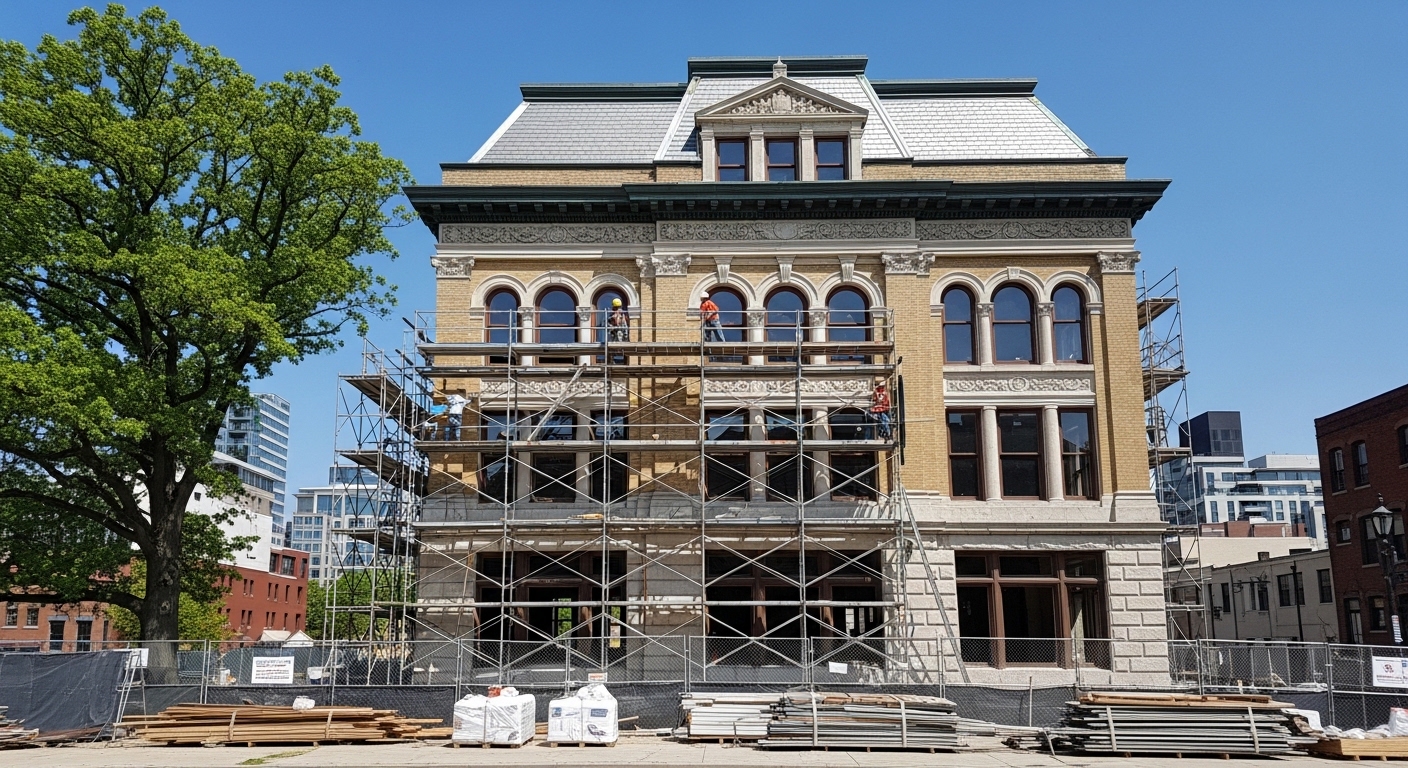
So you bought a historic property in Cuyahoga County. Maybe it’s a century-old Victorian near Cleveland Heights, or a pre-war brick building in Lakewood. Whatever it is — congratulations. And also… I’m sorry. Because you’re about to discover that renovating a historic building is nothing like renovating a normal house.
Here’s the thing: it’s not impossible. Thousands of property owners do it every year, and when done right, the result is something genuinely special. But if you walk into this without knowing the rules, you can burn through money, time, and goodwill with local preservation boards faster than you’d believe.
This guide covers the things that actually trip people up — the permits, the boards, the tax credits, the contractor issues. If you’re planning a renovation on a historic property in Cuyahoga County, read this before you do anything else. And if you want to talk through your specific situation, the team at K&K Construction knows this county inside and out.
7 Things Every Owner of a Historic Cuyahoga County Property Needs to Understand
1. Not Every Old Building Is “Historic” — But Yours Might Be
This one catches a lot of people off guard. Just because a building is old doesn’t automatically mean it’s legally classified as “historic.” There’s a process for that, and the designation matters enormously for what you can and can’t do.
In Cuyahoga County, historic status typically comes from one of three places: the National Register of Historic Places, the State Historic Preservation Office (SHPO), or local landmark designations from individual municipalities. Cleveland, Lakewood, and other cities have their own historic district commissions with their own rules on top of state and federal guidelines.
Before you plan anything, look up whether your property is on any of these lists. If it is, you’re subject to review processes that non-historic properties simply don’t face. If it isn’t, you might still be in a historic
Quick tip: Ohio History Connection maintains a searchable database of listed properties. It takes about five minutes to check. Do it first.
2. You’ll Deal With Multiple Layers of Review — Plan for That
This is where a lot of people get frustrated. They assume there’s one permit, one approval, done. But for a historic property in Cuyahoga County, you might be dealing with:
- Your city or municipality’s building department
- A local Historic Preservation Commission (HPC)
- The Ohio State Historic Preservation Office (SHPO)
- The National Park Service, if you’re applying for federal tax credits
Each of these bodies has different timelines, different standards, and different people you need to win over. The local HPC, for example, is often the one that most directly impacts your day-to-day renovation decisions — things like window replacements, exterior paint colors, and additions.
Honestly, the easiest way to get through this is to treat it like a relationship, not a checklist. Reach out early. Ask questions. These boards generally want to help property owners succeed — they’re not trying to block you. But they do move at their own pace, and surprises aren’t welcome.
Quick tip: Get a pre-application meeting with your local HPC before submitting anything formal. It’ll save you weeks.
3. The Secretary of the Interior’s Standards Are Your Bible
If you’re renovating a historically designated property in Ohio — especially if you want to access any kind of tax incentive — you need to get familiar with the Secretary of the Interior’s Standards for Rehabilitation. This is a federal document, but it becomes very local very fast.
The core idea is this: renovations should preserve a building’s historic character. That means using materials and techniques that are compatible with the original construction. Replacing original wood windows with vinyl? Generally a no. Repointing brick with a mortar that matches the original composition? Yes. Gut renovating an interior in a way that erases historic fabric? Depends on the specifics — but the default is toward preservation.
None of this means you can’t modernize. You can absolutely update plumbing, HVAC, electrical systems. But it needs to be done thoughtfully, and visible exterior and interior changes get scrutinized much more closely.
Quick tip: Download the Standards and keep them nearby. They’re free and they’re the clearest explanation of what reviewers are actually looking for.
4. Tax Credits Can Be a Game Changer — But They Come With Strings
Here’s some genuinely good news: Ohio has some of the best historic tax credit programs in the country. The Ohio Historic Preservation Tax Credit (OHPTC) offers up to 25% of qualified rehabilitation expenses as a tax credit for commercial and residential projects. Combined with the federal Historic Tax Credit (20%), you can offset a significant chunk of your renovation costs.
But — and this is important — you have to apply before the work begins. That’s the part people miss. If you start work and then decide you want the credits, you’ve already disqualified yourself. The credits require pre-approval, ongoing documentation, and final certification that the work met the Standards we just talked about.
For Cuyahoga County property owners, the math can be compelling. On a $400,000 renovation, a 25% state credit is $100,000. That’s real money. But it requires real planning.
Quick tip: Talk to a tax professional or preservation consultant before you apply — not after. The paperwork is manageable but specific, and mistakes at the application stage can cost you the credit entirely.
5. Finding the Right Contractor Is Half the Battle
This might be the most underrated challenge in historic renovation, and I can’t stress it enough: most contractors are not equipped to work on historic buildings. Not because they’re bad at what they do — they might be excellent — but because historic work requires a very different skill set.
Think about it. Repointing historic masonry requires the right mortar mix, or you’ll damage the original brick. Restoring original plaster means knowing how to work with lime, not just drywall compound. Repairing old-growth wood floors is different from installing new hardwood. And all of it has to be done in a way that satisfies preservation reviewers, not just building inspectors.
In Cuyahoga County, there are contractors who specialize in exactly this. K&K Construction is one of them — they’ve worked on historic properties throughout the county and understand what the local preservation boards are looking for. When you’re vetting contractors, ask them directly about their experience with historically designated properties. Ask for references from similar projects. The wrong contractor can create preservation violations that set your whole project back.
Quick tip: Ask your local HPC for a list of contractors they’ve seen do good work on similar projects. It’s not an official endorsement, but it’s useful.
6. Expect the Unexpected — Especially Inside the Walls
Every historic renovation has a moment. You open up a wall and find something nobody expected — original horsehair plaster, knob-and-tube wiring that wasn’t on any plan, structural issues that were hidden for decades, maybe even something fascinating like old newspapers or photographs sealed inside.
This is part of the deal with old buildings. They have history. Sometimes that history is charming; sometimes it’s expensive. The key is building contingency into your budget — not 5%, but closer to 15-20% for truly old properties. I’ve heard from property owners who blew past their budget because they found original radiator systems that needed to be worked around rather than removed, or discovered that exterior stone was in far worse shape than it looked.
The renovation process in Cuyahoga County can also slow down if unexpected discoveries trigger additional review. If you open a wall and find an original feature that wasn’t documented, preservation reviewers might want to weigh in before you proceed.
Quick tip: Document everything as you go — photos, notes, measurements. This protects you with preservation boards, and it’s also just fascinating to have a record of what you found.
7. Local Advocacy Organizations Are Your Allies
Cuyahoga County has a genuinely active preservation community. Organizations like Preservation Cleveland have been working for decades to support property owners navigating exactly what you’re dealing with. They offer resources, workshops, and sometimes direct assistance with grant applications or contractor referrals.
Don’t overlook neighborhood-level organizations either. Many of Cleveland’s historic neighborhoods — Ohio City, Tremont, Detroit Shoreway — have local development corporations or community development organizations that can help connect you with resources specific to your area.
The historic preservation world in Northeast Ohio is smaller than you’d think. People know each other, and being a good-faith participant in that community makes a real difference. Show up to HPC meetings before your project. Get to know your local preservation planner. These relationships smooth the path in ways that are hard to quantify but very real.
Quick tip: Preservation Cleveland’s website has a resource library worth bookmarking. It’s regularly updated and covers many of the county-specific processes we’ve discussed here.
Quick Reference: What Each Review Body Cares About
Here’s a rough summary of who you’re dealing with and what they’re focused on:
Local Historic Preservation Commission (HPC): Exterior changes, materials, visibility from street, compatibility with neighborhood character.
Ohio SHPO: Compliance with Secretary of Interior Standards, documentation for tax credit certification, overall rehabilitation quality.
National Park Service: Federal tax credit qualification, final certification of completed work.
Municipal Building Department: Standard permits — electrical, plumbing, structural. Required regardless of historic status.
Key Takeaways
- Check historic designations early — local, state, and federal listings all matter differently.
- Multiple review bodies are involved; plan your timeline around their schedules, not just yours.
- The Secretary of the Interior’s Standards govern what’s acceptable in a historic renovation.
- Ohio and federal tax credits can be substantial, but require pre-approval before work begins.
- Hire contractors with proven historic preservation experience — it’s a specialized skill.
- Budget 15-20% contingency for old buildings; surprises are normal.
- Preservation organizations and community groups in Cuyahoga County are genuinely helpful resources.
You’ve Got This — But Don’t Go It Alone
Look, historic renovation in Cuyahoga County is genuinely complex. There are layers of regulation, boards to satisfy, budgets that expand, and materials that require specialized knowledge. It’s a lot.
But here’s what I keep coming back to: the people who navigate this successfully aren’t the ones who know everything upfront. They’re the ones who ask the right questions early, build a good team, and stay curious rather than frustrated when things get complicated.
If you’re at the beginning of this process — or even just thinking about it — start with those basic questions: Is my property designated? What review bodies will I deal with? Am I eligible for tax credits? Once you have those answers, the rest starts to fall into place.
And if you want a contractor who’s actually done this work in Cuyahoga County — someone who knows the local boards, understands historic materials, and can help you navigate the process from the first conversation — K&K Construction is worth a call. No pressure, just a conversation with people who genuinely know this county and this kind of work.
Historic buildings are worth saving. Yours included.