
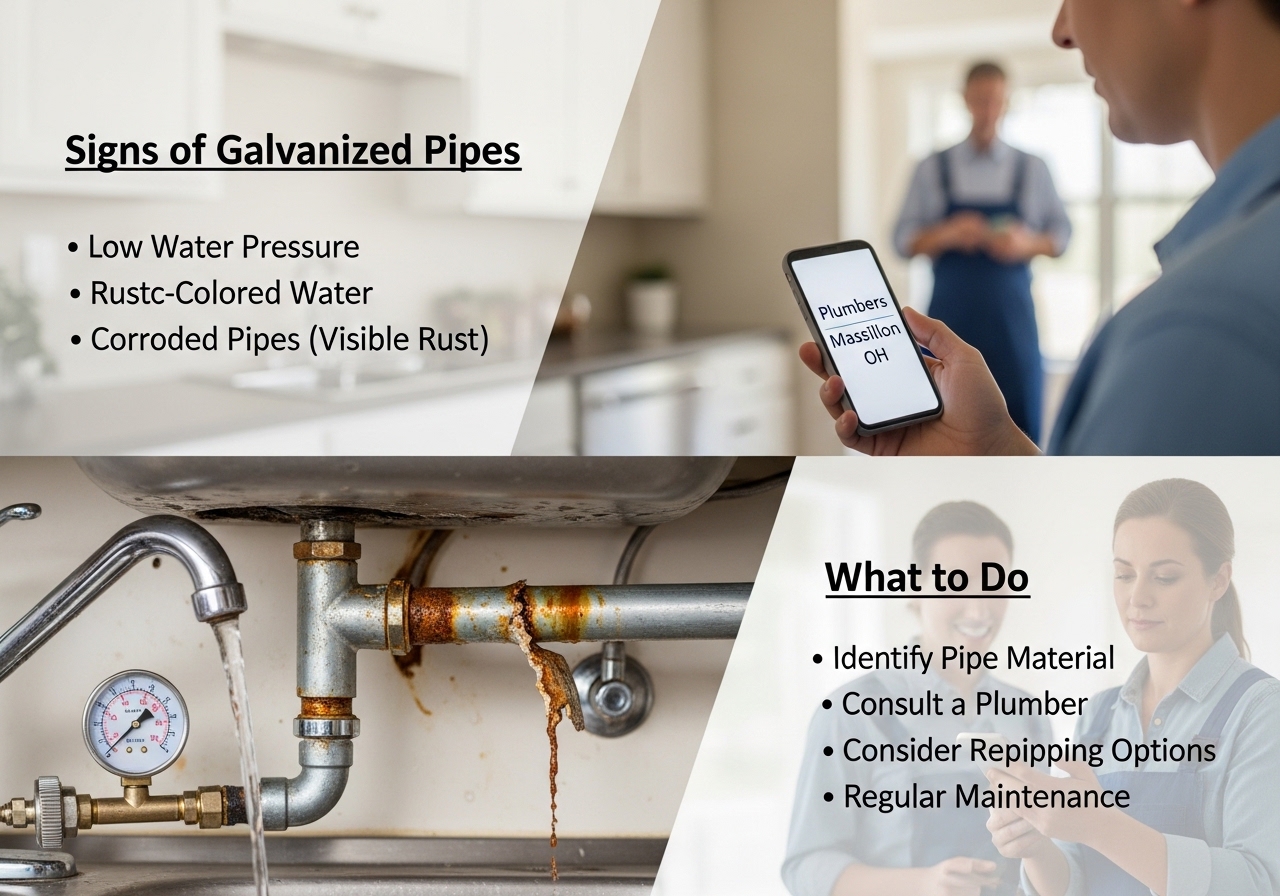
If your Massillon home was built before 1970, there is a very real chance it still has galvanized steel pipes running through its walls, floors, and ceilings. For decades, galvanized pipes were the standard choice for residential plumbing across the United States, including right here in Stark County. They seemed like a durable, reliable solution — and at the time, they were. But decades later, those same pipes have become one of the most common and costly hidden problems homeowners in the Massillon area face today.
The trouble is, galvanized pipes fail slowly and silently. By the time most homeowners notice something is wrong, the damage is already well underway. Knowing the warning signs early can save you thousands of dollars in repairs, protect your family’s health, and give you the confidence to make smart decisions about your home’s future. In this guide, we cover exactly what galvanized pipes are, why they fail, the telltale signs to watch for, and what Massillon homeowners should do when they discover they have them.
What Are Galvanized Pipes?
Galvanized steel pipes are steel pipes that have been coated with a layer of zinc. The zinc coating was designed to prevent rust and corrosion, extending the life of the pipe well beyond what plain steel could offer. When they were first introduced, galvanized pipes were considered a major improvement over lead piping, which had obvious health risks.
The problem is that the zinc coating does not last forever. Over time — typically after 40 to 70 years of use — the zinc layer wears away from the inside of the pipe. Once that protection is gone, the steel beneath begins to corrode. That corrosion builds up as rust and mineral deposits on the interior walls of the pipe, slowly narrowing the passage through which your water flows. Eventually, the buildup becomes severe enough to restrict water pressure, contaminate your water supply, and cause the pipe itself to crack or fail completely.
For Massillon homeowners, this is not a distant or theoretical concern. Many homes in established neighborhoods throughout the city were built during the era when galvanized pipes were standard. If your home has not had a plumbing inspection in years, or if you purchased an older home without a full inspection, you may already be living with the warning signs and not even know it.
Sign #1: Discolored or Rusty Water
One of the most obvious signs of galvanized pipe failure is discolored water coming from your faucets. If you turn on the tap and notice brown, orange, yellow, or reddish water — especially first thing in the morning or after the water has been sitting unused — that is rust breaking loose from the interior walls of corroded pipes.
This is not just an aesthetic problem. Rust-contaminated water is a health concern, particularly for children, elderly residents, and anyone with a compromised immune system. It can also stain your sinks, bathtubs, toilets, and laundry. If your white shirts are coming out of the wash with brown tints, or if your bathroom fixtures have persistent rust stains you cannot scrub away, your pipes are likely to blame.
It is worth noting that some discoloration can temporarily occur if a water main in your neighborhood has been disturbed. But if the problem is persistent and recurring, the source is almost certainly inside your own plumbing system.
Sign #2: Low Water Pressure Throughout the Home
A sudden or gradual drop in water pressure is another major red flag. As galvanized pipes corrode from the inside, the buildup of rust and mineral deposits narrows the interior diameter of the pipe. Water that once flowed freely through a full-sized pipe now has to squeeze through a much smaller opening.
If you notice that your shower pressure has weakened, that it takes longer to fill the bathtub, or that multiple faucets running at once causes a noticeable pressure drop throughout the house, galvanized pipe buildup may be the culprit. Unlike a single clogged aerator or a simple pressure regulator issue, whole-house low pressure that does not respond to simple fixes is a strong indicator of systemic pipe deterioration.
Our team at K&K Construction provides professional plumbing services in Massillon, OH that include full pipe inspections to determine whether corroded galvanized lines are restricting your water flow — before the problem gets worse.
Sign #3: Visible Corrosion or White Mineral Deposits on Pipes
If you have access to exposed plumbing in your basement, crawl space, or utility room, take a close look at the pipes. Galvanized pipes that are corroding will often show visible signs of damage on the outside as well as the inside. Look for:
- A dull gray or dark brown surface (healthy galvanized pipe is a brighter silver-gray)
- White or grayish mineral deposits or flaking around joints and fittings
- Rust-colored staining running down the pipe or onto surrounding surfaces
- Soft spots or areas where the pipe appears pitted or eaten away
Even if the outside of the pipe looks merely dull or aged, that does not mean the inside is in good shape. In fact, galvanized pipes often fail from the inside out, meaning the exterior can look relatively intact while the interior is heavily clogged with rust and scale. A professional plumbing assessment is the only way to know for certain what condition the interior walls are in.
Sign #4: Uneven Water Pressure Between Fixtures
Here is a subtler sign that many homeowners overlook: pressure that is noticeably different between different fixtures in the house. You might have decent pressure at your kitchen sink but very poor pressure at the upstairs bathroom shower. Or one bathroom might have strong pressure while another in the same house barely trickles.
This uneven distribution often happens because galvanized pipes corrode at different rates throughout the system. A stretch of pipe in one part of the house may be nearly completely blocked while another section is still partially functional. The result is inconsistent, unpredictable pressure that makes daily life frustrating and signals serious internal pipe deterioration.
If you are also planning updates to areas of your home affected by plumbing issues, our home remodeling services in Massillon, OH can coordinate plumbing upgrades with your broader renovation plans, saving you time, money, and disruption.
Sign #5: Frequent Leaks or Pipe Failures
As galvanized pipes corrode and weaken, the structural integrity of the pipe itself is compromised. This leads to pinhole leaks, joint failures, and in severe cases, full pipe bursts. If you have had recurring leaks in the same area of your home, or if you keep patching the same pipe only to have it fail again nearby, the underlying galvanized system is telling you it has reached the end of its useful life.
Water damage from slow leaks is especially damaging to your home’s structure. A pinhole leak inside a wall can go undetected for months, rotting wood framing, promoting mold growth, and compromising drywall — all problems that compound in cost and complexity the longer they go unaddressed. If you have noticed water stains on ceilings or walls, soft spots in flooring near plumbing, or a musty smell in certain rooms, a hidden galvanized pipe leak may be the cause.
Our structural utility upgrades in Massillon, OH services are specifically designed to address situations like this — replacing aging infrastructure before it causes serious structural damage to your home.
Sign #6: Your Home Was Built Before 1970
Sometimes the most reliable sign is simply the age of your home. If your Massillon home was constructed before 1970, there is a significant probability that galvanized pipes are part of the original plumbing system. This is especially true if you are the original owner, or if you purchased a home without a detailed plumbing inspection that specifically checked pipe material and condition.
Even if the home has had some plumbing work done over the decades, partial updates are common. A previous owner may have replaced pipes in one bathroom while leaving original galvanized lines throughout the rest of the house. A professional inspection is the only way to map exactly what materials are currently in your system and where.
Why Massillon Homes Are Particularly At Risk
Massillon has a rich history as one of Stark County’s established communities, and that history means a substantial portion of the city’s housing stock dates back to the mid-twentieth century or earlier. Many of the beautiful older homes in Massillon’s neighborhoods — the kind with character, craftsmanship, and real history — were built during exactly the era when galvanized pipes were standard. This is not a criticism of those homes; it is simply a reality that comes with older construction.
Additionally, Stark County’s water supply contains varying levels of minerals that can accelerate the corrosion process inside aging galvanized pipes. Hard water deposits — calcium and magnesium — combine with rust inside the pipe to create a particularly stubborn buildup that reduces flow and accelerates structural failure.
What Should Massillon Homeowners Do?
If you recognize one or more of the warning signs above, here is a practical roadmap for what to do next.
Step 1: Schedule a Professional Plumbing Inspection Do not try to assess the full extent of galvanized pipe corrosion on your own. A professional can use camera inspection technology to see inside your pipes and give you an accurate picture of their condition. This inspection will tell you how much of your system is galvanized, how severely corroded those pipes are, and what priority level the replacement carries.
Step 2: Understand Your Replacement Options The good news is that modern pipe materials are far superior to galvanized steel. The most common replacements used today are copper piping, CPVC (a rigid plastic), and PEX (a flexible plastic tubing). Each has advantages depending on your home’s layout, your budget, and how extensively the replacement needs to be done. A qualified plumbing contractor can walk you through the best option for your specific situation.
Step 3: Plan for the Full Replacement, Not Just Patches It is tempting to repair only the sections of pipe that are actively leaking or causing visible problems. But in most cases, if one section of galvanized pipe has failed, the rest of the system is not far behind. Patching one area while leaving the rest of the corroded system in place is a short-term fix that leaves you vulnerable to ongoing failures. Planning a full replacement is almost always the more cost-effective choice in the long run.
Step 4: Coordinate With Other Planned Renovations Pipe replacement requires opening walls, ceilings, and floors to access the plumbing lines. If you are planning any other home improvements — a bathroom remodeling project in Massillon, a kitchen update, or finishing a basement — coordinating those projects with your pipe replacement is a smart strategy. You will already have walls open and contractors on site, which dramatically reduces the overall cost and disruption compared to doing each project separately.
Step 5: Check for Water Damage Once the pipes are replaced, have your contractor assess whether any hidden water damage occurred during the years of slow leaking or corrosion. Addressing water-damaged framing, insulation, or drywall promptly prevents mold growth and ensures your newly repaired plumbing system is operating inside a structurally sound home.
The Cost of Waiting
Some homeowners put off addressing galvanized pipe problems because the upfront cost of replacement feels significant. But the real cost of waiting is almost always higher. Ongoing leaks cause water damage that multiplies repair costs. Contaminated water can have health consequences. A full pipe burst can cause catastrophic damage to floors, ceilings, walls, and personal belongings. And in some cases, persistent water quality issues from corroded pipes can affect your home’s resale value and complicate inspections when you decide to sell.
Addressing galvanized pipes proactively, on your timeline and budget, is always the better option compared to waiting for an emergency that forces your hand.
K&K Construction: Massillon’s Trusted Home Improvement Partner
At K&K Construction, we have worked with Massillon homeowners on everything from targeted plumbing upgrades to full-scale home rehabilitation projects. We understand the specific challenges that come with older homes in this area, and we bring the expertise, honesty, and craftsmanship that your home deserves.
Whether you need a plumbing inspection, a complete pipe replacement, or a broader home upgrade that includes plumbing modifications and fixture installation in Massillon, our team is ready to help. We serve homeowners throughout Massillon and the surrounding Stark County area with transparent pricing, quality workmanship, and a genuine commitment to getting the job done right.
Do not wait until a pipe bursts or your water turns rust-brown to take action. If your home is showing any of the warning signs described in this article, reach out to K&K Construction today for a professional assessment. Your home — and your family — deserve clean water, reliable pressure, and plumbing infrastructure you can trust for decades to come.