
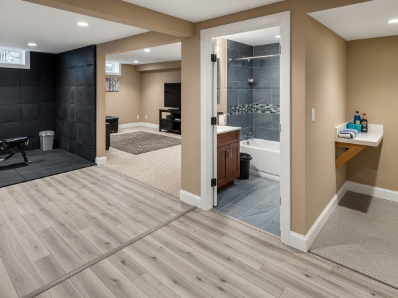
If you’re finishing your basement in Ohio, one of the most important decisions you’ll make is choosing the right flooring. It might seem like a straightforward choice, but basements come with a unique set of challenges — moisture, cold concrete subfloors, humidity swings, and the occasional minor flooding — that make the decision far more complex than picking flooring for an upstairs bedroom or living room.
Ohio homeowners deal with a climate that swings from hot, humid summers to cold, wet winters. That combination creates real stress on basement floors. The wrong flooring choice can lead to warping, mold, mildew, and costly replacement within just a few years. The right choice, however, can give you a durable, beautiful, and comfortable lower level that adds genuine living space and value to your home.
In this guide, we’ll walk through the best flooring options for a finished basement in Ohio, what to avoid, and how to make the smartest investment for your specific needs. Whether you’re creating a home office, a family entertainment room, a guest suite, or a home gym, this breakdown will help you choose with confidence.
Why Ohio Basements Require Special Flooring Consideration
Before diving into specific materials, it’s worth understanding what makes Ohio basements unique. The state sits in a region with significant seasonal moisture variation. Spring thaw and heavy rains can raise groundwater levels, putting pressure on basement walls and floors. Relative humidity in Ohio regularly hits 70–80% during summer months, and concrete subfloors — which are naturally porous — can absorb and release moisture year-round.
This means your flooring must be able to handle:
- Moisture from below (concrete sweating, groundwater seepage)
- Humidity from the air (especially in summer)
- Cold temperatures (basements are often 5–10°F cooler than the rest of the house)
- Subfloor imperfections (concrete is rarely perfectly level)
Skipping proper planning on these four factors is the number one reason basement flooring fails prematurely in Ohio homes. If you’re planning a full basement transformation, working with experienced professionals who understand basement remodeling in Massillon, OH and the surrounding region makes a significant difference in long-term results.
The Best Flooring Options for Ohio Basements
1. Luxury Vinyl Plank (LVP) — The Top Choice for Most Ohio Homeowners
Luxury vinyl plank is widely considered the best all-around flooring for finished basements in Ohio, and for good reason. It is 100% waterproof, dimensionally stable in temperature and humidity changes, comfortable underfoot, and available in a stunning range of wood and stone looks.
Unlike hardwood, LVP does not swell or warp when exposed to moisture. Unlike laminate, it won’t delaminate if water sits on it. A high-quality LVP product (look for at least 6mm thick with an attached underlayment) can handle virtually everything an Ohio basement throws at it.
Pros:
- 100% waterproof
- Warm and comfortable underfoot
- Easy DIY or professional installation
- Wide range of styles and price points
- Durable against scratches and heavy foot traffic
Cons:
- Can feel hollow or less premium than real wood
- Low-quality options can dent under heavy furniture
LVP works beautifully in basement family rooms, home offices, playrooms, and even basement bedrooms. It’s the go-to recommendation from contractors across the state, and it pairs well with a range of interior finishing choices available through professional flooring services in Massillon, OH.
2. Ceramic and Porcelain Tile — Best for Wet Zones
If your finished basement includes a bathroom, laundry area, or wet bar, ceramic or porcelain tile is the gold standard. Tile is completely impervious to water and doesn’t support mold growth the way organic materials can.
Porcelain tile, in particular, has a very low water absorption rate — often below 0.5% — making it ideal for below-grade spaces in Ohio’s climate. Modern large-format tiles (12×24 or even 24×48 inches) are popular for creating a sleek, upscale look in finished basements.
The main challenge with tile in basements is comfort. Tile over a concrete subfloor can feel cold and hard. The solution is a quality uncoupling membrane (like Schluter DITRA) combined with radiant in-floor heating, though this adds cost. Area rugs can also help make tiled spaces feel more inviting.
Pros:
- Completely waterproof
- Extremely durable and long-lasting
- Easy to clean and maintain
- Works perfectly for bathroom and wet areas
Cons:
- Cold and hard underfoot without heating
- Grout lines require regular cleaning and sealing
- Cracking possible if subfloor flexes or settles
3. Engineered Hardwood — A Premium Option with Limitations
Real hardwood flooring should never be installed below grade in Ohio. Period. However, engineered hardwood — which uses a real wood veneer over a plywood or HDF core — can work in basements if conditions are right.
The key word is “can.” Engineered hardwood is more moisture-resistant than solid hardwood, but it is not waterproof. If your basement has any history of water intrusion, or if you haven’t addressed moisture issues before installation, engineered hardwood will fail. You’ll see cupping, gapping, and eventually mold.
If your basement is genuinely dry and conditioned year-round (meaning you run a dehumidifier consistently), engineered hardwood can give you a beautiful, warm, premium feel that LVP cannot fully replicate. It also adds more resale value than vinyl in the eyes of many buyers.
Pros:
- Beautiful, authentic wood appearance
- Adds premium appeal and resale value
- More stable than solid hardwood
Cons:
- Not waterproof — moisture is a real risk
- Requires a consistently dry, conditioned basement
- Higher cost than LVP
4. Epoxy Flooring — Best for Utility and Gym Spaces
If you’re converting your basement into a home gym, workshop, or utility space, epoxy coating over the concrete slab is an excellent choice. It’s extremely durable, completely sealed against moisture, easy to clean, and can be customized with color chips or metallic finishes for a professional look.
Epoxy is not a traditional flooring material — it’s a coating applied directly to the concrete. This means it adds virtually no height to the floor (important in basements with low ceilings), and it eliminates the need for underlayment or subfloor prep beyond cleaning and grinding the existing concrete.
For home gyms, epoxy paired with rubber flooring tiles or interlocking foam mats creates the perfect combination of durability and comfort.
Pros:
- Extremely durable and tough
- Fully sealed against moisture
- Easy to clean
- No added floor height
Cons:
- Hard and cold underfoot for living spaces
- Can be slippery when wet unless anti-slip additives are used
- Professional installation recommended for best results
5. Carpet — Use with Caution
Carpet is one of the most common basement flooring choices across Ohio, but it’s also one of the riskiest. Traditional carpet absorbs moisture, and once it does, it becomes a breeding ground for mold, mildew, and allergens that can seriously affect indoor air quality throughout your home.
If you want the warmth and comfort of carpet in your finished basement, choose a moisture-resistant, low-pile carpet with a synthetic fiber like nylon or polyester. More importantly, use a closed-cell foam pad rather than a traditional open-cell pad, which soaks up water like a sponge.
Even with the best carpet and pad, if your basement has any history of water issues, carpet is not recommended. However, for a dry, well-waterproofed basement that’s used as a playroom or entertainment space, the right carpet installation can work.
Pros:
- Warm, soft, and comfortable
- Affordable upfront cost
- Good sound insulation
Cons:
- Absorbs moisture and promotes mold
- Difficult to dry after flooding
- Traps allergens and dust
What to Avoid in Ohio Basement Flooring
Solid hardwood: Never install solid wood below grade in Ohio. The moisture exposure will cause it to warp and fail — guaranteed.
Standard laminate: Most laminate flooring is not waterproof despite claims of water resistance. Swelling, delamination, and mold under the planks are common problems in basements.
Standard open-cell carpet padding: Even if you use moisture-resistant carpet, traditional padding will hold water and foster mold.
Skipping subfloor prep: Installing new flooring over an uneven or damp concrete slab is one of the most common and costly mistakes in basement renovations.
Don’t Forget: Moisture Testing Before Installation
Before you install any flooring in your Ohio basement, conduct a concrete moisture test. The simplest method is the plastic sheet test: tape a 2-foot square of plastic sheeting to the concrete, seal all edges, and leave it for 24–48 hours. If moisture collects under the plastic, you have a moisture problem that must be addressed before any flooring goes down.
For a more accurate measurement, a calcium chloride test or a relative humidity probe test will give you a specific moisture emission rate. Most flooring manufacturers publish acceptable moisture levels for their products, and exceeding those limits can void your warranty.
Addressing moisture often means installing a vapor barrier, improving drainage around your foundation, or applying a concrete sealer. These steps, combined with professional basement finishing, ensure your flooring investment lasts for decades. If your basement is part of a larger home renovation project, many of these structural considerations can be handled together with other upgrades like insulation and energy efficiency improvements that keep your basement comfortable year-round.
Choosing the Right Flooring for Your Basement’s Purpose
The best flooring also depends on how you plan to use your finished basement:
Home theater or entertainment room: LVP or low-pile carpet for warmth and acoustics.
Home office or bedroom: LVP or engineered hardwood (if conditions allow) for a professional, comfortable feel.
Home gym: Epoxy coating plus rubber mats for durability and safety.
Kids’ playroom: LVP for durability and easy cleanup; add area rugs for softness.
Wet bar or bathroom: Porcelain tile for complete waterproofing.
Combining flooring types in a large, open basement layout is also a great option. For example, tile in the bathroom and wet bar area transitioning to LVP in the main living space creates both function and visual continuity. A skilled contractor can help you plan these transitions seamlessly as part of a comprehensive home remodeling project.
Why Professional Installation Matters
Basement flooring installation is not just about laying down planks or tiles. It involves moisture assessment, subfloor preparation, acclimation periods for certain materials, proper underlayment selection, and ensuring transitions are safe and code-compliant. Mistakes at any of these stages can lead to premature failure, voided warranties, and expensive repairs.
Working with experienced local contractors who understand Ohio’s climate and building conditions is the smart choice. From the initial design consultation through final installation, professional guidance helps you avoid the pitfalls that trip up many DIY basement projects. If you’re located across northeastern Ohio and are exploring your options, check out the full range of basement remodeling services available in Stark County to get a sense of what a professional finish looks like.
Final Verdict: What’s the Best Basement Flooring in Ohio?
For most Ohio homeowners finishing a basement, Luxury Vinyl Plank is the best overall choice. It handles moisture, looks great, feels comfortable underfoot, and is available at price points that suit a wide range of budgets. For wet zones, pair it with porcelain tile. For gym or utility spaces, go with epoxy. Reserve engineered hardwood only for basements with verified dry conditions and consistent climate control.
No matter which material you choose, the foundation of a successful basement floor is always the same: address moisture first, prepare your subfloor properly, and work with professionals who know what they’re doing.
Ready to transform your basement into a functional, beautiful living space? Reach out to the team at K&K Construction OH for expert basement remodeling in Massillon and throughout northeastern Ohio. From flooring selection to full basement finishing, they bring the expertise and craftsmanship to get it done right — the first time.