
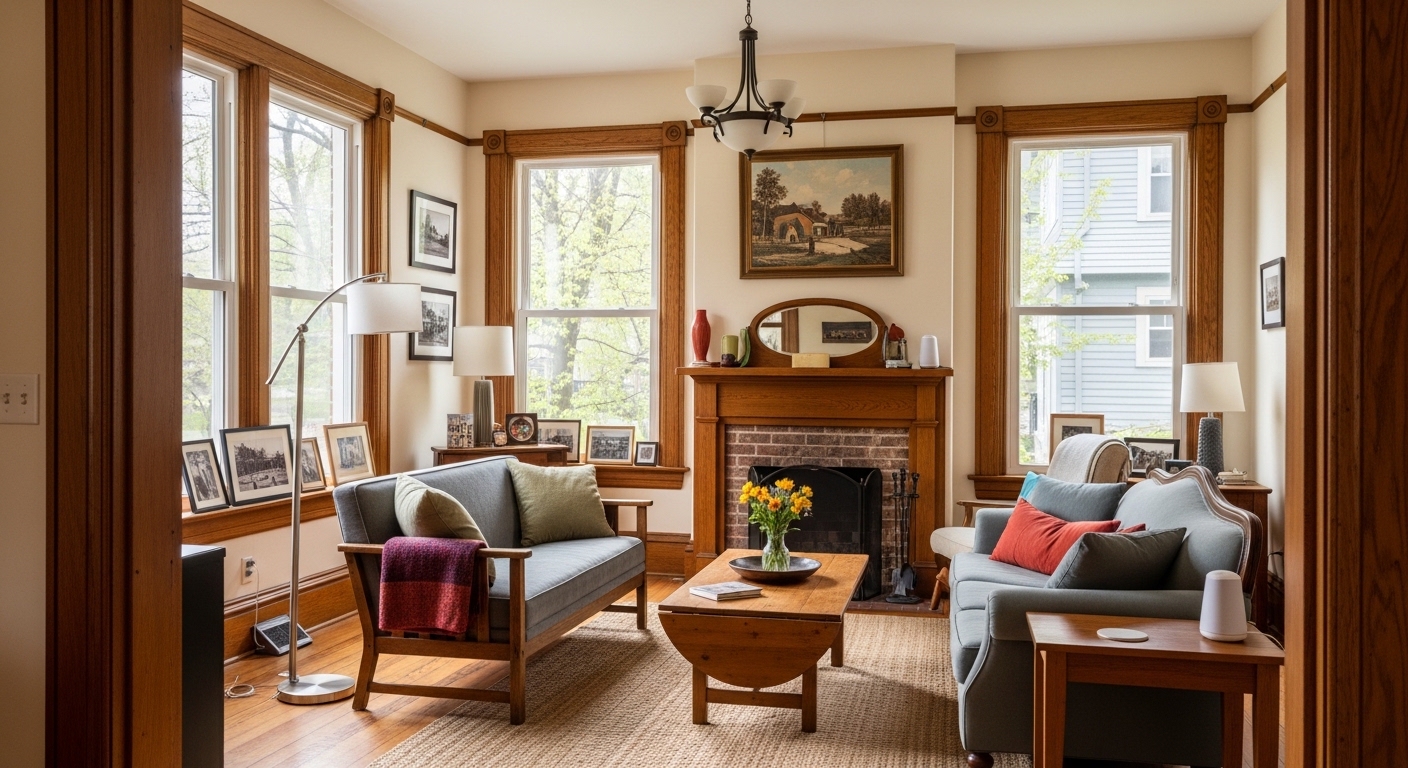
Picture this: you’ve just bought a 1890s farmhouse in Ohio. The bones are incredible. Original hardwood floors with a patina that no manufactured wood could ever fake. A deep front porch with turned spindles. Plaster walls that are slightly uneven in the most beautiful way — the kind that catches afternoon light differently than any drywall ever could.
And then a well-meaning contractor walks through and starts pointing at things. That old window trim? “We can replace that with vinyl — it’ll be much easier to maintain.” Those wavy glass windows? “Let’s swap those out for double-pane, you’ll save on energy.” The plaster? “Honestly, just tear it out and drywall it. Way cheaper.”
And you stand there thinking… but that’s the whole point of this house.
If that moment feels familiar — or if you’re about to face it — you’re in the right place. Preserving a historic home in Ohio is one of the most rewarding things a homeowner can do. It’s also one of the easiest things to accidentally get wrong. Not because people don’t care, but because the conventional renovation industry isn’t set up for it.
So let’s talk about how to actually do this well.
(If you want to work with people who specialise in historic building preservation in Ohio, that resource is worth bookmarking for later.)
Why Historic Homes Deserve a Different Approach
Here’s the thing most renovation guides miss: old buildings weren’t built the way modern ones are. And that’s not a problem — it’s actually kind of amazing.
Pre-1940s construction often used materials and techniques that are genuinely superior in certain ways. Old-growth lumber is denser and more rot-resistant than modern lumber. Lime plaster regulates humidity and breathes in ways that drywall doesn’t. Wavy glass windows — those single-pane originals that everyone wants to replace — are made from glass that’s actually harder and more durable than most modern glass.
When you tear out “old” materials and replace them with “new” ones, you’re often trading something that would last another hundred years for something that’ll need replacing in twenty.
And that’s before we even talk about character. The visual richness of an old home — the slight variations, the hand-crafted details, the signs of age that tell a story — that stuff can’t be reproduced. Once it’s gone, it’s gone.
The Guiding Principle: Preserve First, Replace Last
If you take one thing from this article, make it this: preservation is always preferable to replacement.
This isn’t just my opinion. It’s the foundation of the Secretary of the Interior’s Standards for Rehabilitation — the federal framework that governs how historic properties should be treated. But honestly, it’s also just common sense once you understand what you’re working with.
The hierarchy goes like this:
- Preserve what’s there if it’s structurally sound
- Repair what’s deteriorated, using matching materials and methods
- Replace only what genuinely can’t be saved — and when you do, match the original as closely as possible
That third step — replacement — is where a lot of well-intentioned projects go sideways. People replace things that could have been repaired. Or they replace with materials that are easier to source but visually wrong. Or they go too modern because someone convinced them it would be “more practical.”
Practical isn’t the goal here. Stewardship is.
The Specific Battles You’ll Face (And How to Handle Them)
Windows: Please Don’t Replace Them
This is the one I feel most strongly about, so let’s just get into it.
Historic windows — true divided lights, wavy glass, wooden sashes — are constantly under attack for their energy efficiency. “Replace them with double-pane and you’ll save on heating bills.” And look, I get it. The energy argument sounds compelling.
But here’s what that argument leaves out: a well-maintained historic window with a good storm window added on the exterior performs almost identically to a modern double-pane window in terms of energy efficiency. And it’ll outlast that double-pane by decades, because wood windows can be repaired indefinitely. When a seal fails in a modern insulated unit, you replace the whole sash. When a glazing bead fails in an old wooden window, you replace the glazing bead.
There are craftspeople who specialize in historic window restoration — re-glazing, repairing sashes, adding weatherstripping. It’s almost always worth exploring before you pull the trigger on replacement.
And the wavy glass itself? That slight distortion, the way it makes the outside world look like you’re viewing it through old water — that’s not a defect. That’s 130 years of hand-pulled craftsmanship. Protect it.
Plaster: It’s Worth Saving
Plaster walls are thick, dense, and incredibly good at damping sound. They also have a surface quality — a subtle texture and depth — that drywall just doesn’t have. When you run your hand across good old plaster, you can feel the difference.
Yes, plaster cracks. Especially in Ohio, where freeze-thaw cycles are a real thing and old houses move. But cracks in plaster are usually fixable. A skilled plasterer can match existing texture and make repairs nearly invisible.
The time to tear out plaster is when it’s actively falling off the wall in large sections, when the keys (the little plaster fingers that grip the lath behind) have completely failed, or when there’s serious moisture damage behind it. Cosmetic cracks, settling cracks, hairline cracks — those are repair territory, not replacement territory.
One more thing: plaster removal is messy, time-consuming, and generates a shocking amount of debris. It’s not actually cheaper than repair when you factor in disposal costs and the labor to re-run all your electrical (which you’ll need to do once the walls are open). Don’t let anyone tell you otherwise without running the actual numbers.
Original Woodwork: Non-Negotiable
If your historic home still has its original trim, casings, baseboards, built-ins, or millwork — protect them like they’re irreplaceable. Because they are.
That stuff was made from old-growth lumber, often at scales and profiles you simply can’t buy today. The base mouldings alone on a good Victorian or Craftsman home would cost a fortune to replicate in custom milling. And the replications never quite match anyway — the proportions are always slightly off, the wood grain different.
Stripping and refinishing original woodwork is always worth it. Even if it’s been painted over multiple times (which it probably has), the wood underneath is almost certainly in better shape than you’d expect.
Foundations and Structural Elements: Know When to Call an Expert
This is where I’ll say honestly: there are limits to what a homeowner should DIY. Historic foundations — stone, brick, early concrete — behave differently from modern poured concrete. They’re often designed to flex slightly, to allow moisture to pass through rather than building up pressure.
If someone tells you to waterproof the interior of an old stone foundation with a membrane and drain tile system, get a second opinion from someone who specialises in historic structures. That solution works well for modern foundations. For old stone foundations, trapped moisture can cause the mortar between stones to deteriorate from the back, which is a slow-motion disaster.
The right answer for old foundations is usually about managing exterior drainage, repointing deteriorated mortar with the correct lime-based mortar (not Portland cement, which is too hard and can spall the stone), and letting the foundation breathe the way it was designed to.
Expert Insights: What the Best Preservation Projects Have in Common
I’ve seen a lot of historic home projects over the years — the ones that go well and the ones that don’t. And a few patterns consistently appear in the successful ones.
They start with a thorough assessment. Before any work begins, the best projects involve a real understanding of what’s there: what’s original, what’s been modified, what needs immediate attention vs. what can wait. This takes time, and it’s genuinely worth it.
They hire people with the right experience. Not just good contractors — contractors who understand historic materials and methods. There’s a real difference. Someone who’s great at modern renovation can inadvertently cause serious damage to a historic property, not out of carelessness but because the rules are different.
They’re patient with matching. Finding the right materials — the right mortar mix, the right window putty, the right paint formula — takes time. The temptation to just use whatever’s at the hardware store is real. Resisting it makes a huge difference in the final result.
They document everything. Old photos, measured drawings, notes on what was found inside the walls — all of it. Not just for preservation purposes, but because that documentation is invaluable if something needs to be revisited later.
The team at K&K Construction has worked on historic properties across Ohio and understands all of this firsthand — if you’re in the thick of a project and need guidance, they’re worth reaching out to.
How to Actually Start Your Preservation Project
Okay, so you’re sold on doing this right. What do the first steps actually look like?
1. Find out your property’s status. Is your home listed on the National Register of Historic Places? Is it in a historic district? This affects what programs and incentives are available to you — and in some cases, what changes require approval.
2. Contact the Ohio Historic Preservation Office. Seriously. The OHPO staff are helpful and they’d rather talk with you early than sort out problems later. They can tell you about programs, incentives, and technical guidance specific to your property type.
3. Get a preservation-minded assessment done. Before you start planning work, have someone walk through the property who understands historic structures. Not a home inspector (though that’s valuable too) — someone who can identify original materials, assess their condition, and give you a realistic picture of what needs to happen and in what order.
4. Develop a phased plan. Most people can’t do everything at once, and that’s fine. Prioritize what’s urgent (roof, water intrusion, foundation) and develop a realistic sequence for the rest. A good plan lets you make smart decisions year by year without losing sight of the whole.
5. Apply for available incentives. Ohio’s Historic Preservation Tax Credit can offset significant costs on qualifying projects. Federal credits may also be available. These take time to apply for, so build that into your timeline.
Frequently Asked Questions
Can I add modern amenities to a historic home? Yes — the goal is preserving character, not refusing to live in the 21st century. Updated kitchens and bathrooms, HVAC, modern electrical — all of this is compatible with preservation when done thoughtfully. The key is doing it in a way that doesn’t destroy original fabric and is reversible if future owners want to restore those spaces.
Do I need permits for preservation work? Generally yes, for structural work or significant changes. If your property is in a local historic district, you may also need a Certificate of Appropriateness from a local historic preservation commission. Check with your local municipality.
What if my house isn’t officially “historic” — does any of this apply? Absolutely. The principles of preservation — preferring repair over replacement, using compatible materials, respecting original character — apply to any old home regardless of official designation. You just won’t have access to the formal incentive programs.
How do I find contractors who understand historic work? Ask specifically about their experience with pre-1940s structures. Ask what they know about lime mortar vs. Portland cement. Ask how they’d approach repairing a plaster wall. The answers will tell you quickly whether they understand the difference between historic preservation and standard renovation.
Is preservation more expensive than standard renovation? Sometimes yes, sometimes no. Skilled repair work can be more expensive per square foot than replacement. But you’re often repairing things that would cost far more to replace with equivalent quality. And when tax credits are available, the net cost can be surprisingly competitive.
The Whole Point
Here’s what I keep coming back to: your historic home already has something. Something that took a century to develop. A particular way it holds morning light, a smell of old wood and plaster that somehow feels like home even if you just moved in, details that were made by hand by someone who cared.
Your job — our job, really, as stewards of these buildings — is to not mess that up.
That doesn’t mean freezing the house in time or living in a museum. It means understanding what you have, making decisions that respect it, and doing the work carefully enough that someone else can love this house a hundred years from now the way you love it today.
If you’re starting that journey — or you’re already in the middle of it and wondering if you’re on the right track — the team at K&K Construction specializes in exactly this kind of work in Ohio. It helps to talk to people who’ve actually done it.
Your house has a story. You’re the next chapter.