
For millions of Ohio homeowners, the dream of staying in the home they love well into their senior years is not just possible — it is a practical, achievable goal. The concept of “aging in place” has become one of the most important conversations in home remodeling today, and for good reason. According to AARP, nearly 90% of adults over 65 want to remain in their own homes as long as possible. Yet the bathroom — one of the most frequently used rooms in any house — is also one of the most hazardous spaces for older adults. Slippery surfaces, high bathtub ledges, and a lack of support structures make the bathroom a leading location for household falls and injuries among seniors.
The good news is that with the right modifications, your bathroom can be transformed from a risk zone into a safe, comfortable, and even beautiful space that supports independence for decades to come. Whether you are planning ahead for your own future or modifying your home for an aging parent, strategic bathroom upgrades like walk-in showers, grab bars, and ADA-compliant fixtures make all the difference. If you are in Northeast Ohio, working with an experienced local contractor who understands both the technical and aesthetic side of these upgrades is essential.
Why Bathroom Safety Matters for Aging in Place
The bathroom is statistically one of the most dangerous rooms in the home for seniors. The Centers for Disease Control and Prevention (CDC) reports that falls are the leading cause of injury-related death among adults aged 65 and older, and a significant number of those falls occur in bathrooms. Wet tile floors, stepping over bathtub walls, and the effort required to lower oneself onto a toilet or rise from it all present real, daily hazards for aging adults.
Beyond physical safety, there is a powerful psychological dimension to consider. Maintaining independence in personal hygiene and daily routines is closely tied to dignity and mental well-being. When seniors can bathe safely without assistance, it preserves their confidence and quality of life. Investing in bathroom modifications early — before an accident occurs — is both a preventative health measure and an investment in long-term independence.
Ohio homeowners have a distinct advantage in this area: local contractors experienced in bathroom remodeling services in Massillon, OH understand the specific needs of aging clients and can design spaces that meet both safety codes and personal style preferences.
Walk-In Showers: The Gold Standard of Accessible Bathing
One of the single most impactful modifications you can make for aging in place is replacing a traditional bathtub with a walk-in shower. Standard bathtubs require you to lift your legs up and over a 15 to 18-inch ledge, which becomes increasingly difficult — and dangerous — as balance and mobility decline. A walk-in shower eliminates this barrier entirely.
What Makes a Walk-In Shower Age-Friendly?
A properly designed walk-in shower for aging in place goes beyond simply removing a tub. Here are the key features that make a walk-in shower genuinely safe and functional:
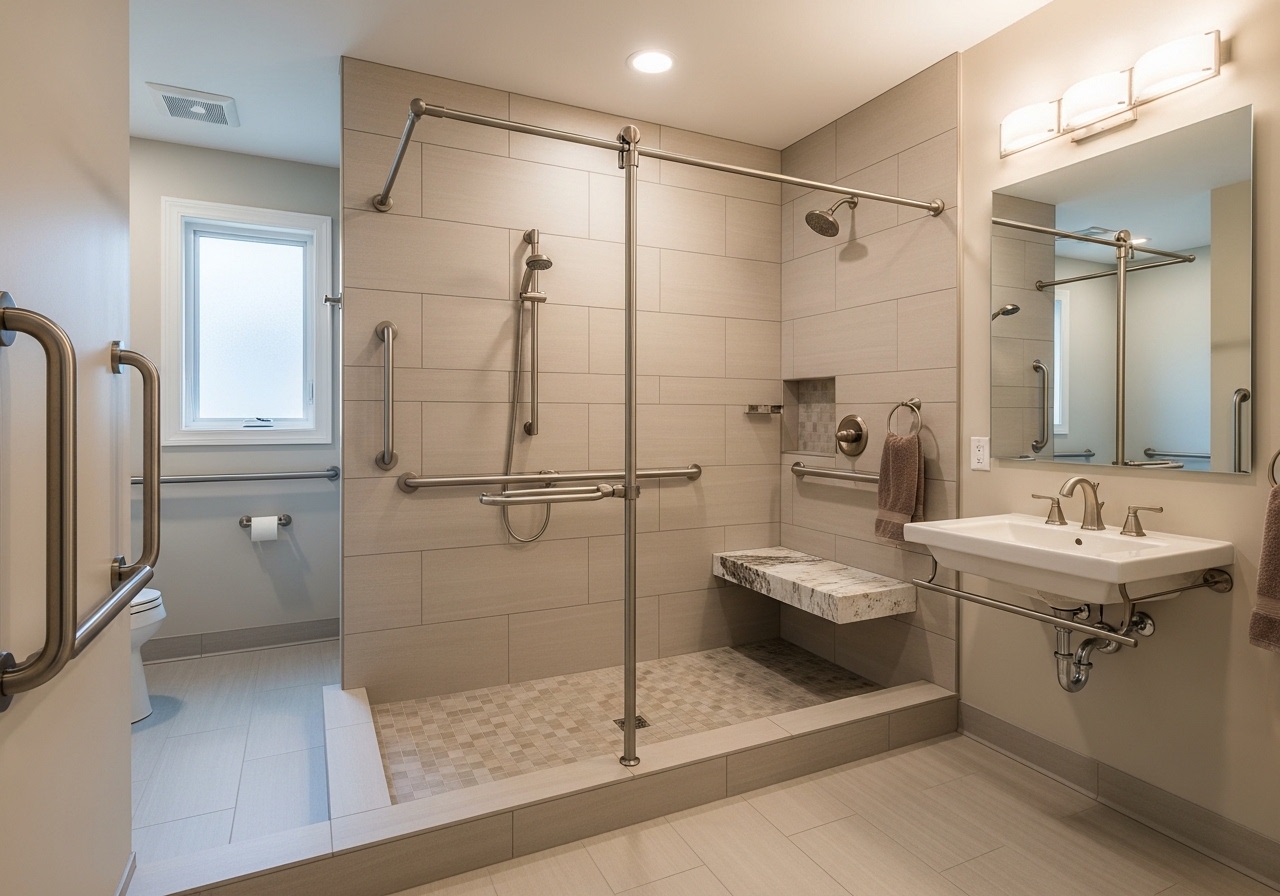
Zero-threshold or low-threshold entry: A curbless (zero-threshold) shower entry means there is no ledge to step over whatsoever. The floor transitions seamlessly from the bathroom tile into the shower, making it fully accessible for walkers, wheelchairs, and those with limited mobility. Even a low-curb option (under one inch) dramatically reduces fall risk compared to traditional shower pans.
Non-slip flooring: Wet shower floors are a serious hazard. Smaller mosaic tiles, textured stone, or specifically rated slip-resistant tile materials provide the traction needed to prevent falls. An experienced tile installer will ensure proper sloping so water drains efficiently without pooling.
Built-in shower bench or fold-down seat: A sturdy bench inside the shower allows users to sit while bathing, reducing fatigue and the risk of losing balance. Fold-down teak benches are a popular choice for those who want the option without permanently taking up shower space.
Handheld showerhead: A handheld showerhead on an adjustable slide bar gives users full control over water direction whether standing, seated, or using mobility aids. This small upgrade makes an enormous practical difference.
Wider entry opening: Standard shower doors are typically 24 to 26 inches wide. For aging in place — and especially to meet ADA guidelines — a minimum 36-inch wide opening is recommended, with 42 inches or more preferred for wheelchair access.
Glass or open design: Frameless glass doors or an open walk-in design (with a properly positioned half-wall to contain spray) create a more spacious, less claustrophobic showering experience while allowing a caregiver to assist from outside if needed.
Working with professionals who offer home remodeling services in Massillon, OH means getting a team that can design and build your walk-in shower as a cohesive part of your overall bathroom renovation — not just a standalone afterthought.
Grab Bars: Simple, Effective, Life-Saving
If there is one modification that every aging-in-place bathroom needs, it is grab bars. These sturdy support rails, when properly installed into wall studs or with specialized anchors, provide critical stability at the moments of greatest fall risk: entering and exiting the shower, sitting down and rising from the toilet, and moving around on wet floors.
Where Should Grab Bars Be Installed?
In the shower: At minimum, a horizontal grab bar on the wall adjacent to where you stand, and an angled or vertical bar near the shower entry. Many aging-in-place designs include a bar on all three walls for comprehensive support.
Near the toilet: A side grab bar (or two, one on each side) allows users to lower themselves and rise from the toilet safely. These can be wall-mounted or attached to a floor-standing frame if wall mounting is not feasible.
At the bathtub (if retaining one): If a tub is being kept, grab bars on both the long side and the short entry end are critical, along with a non-slip mat both inside the tub and on the floor outside it.
Grab Bar Specifications That Matter
Not all grab bars are created equal. For aging-in-place purposes, bars should be rated to support at least 250 to 300 pounds, be mounted into wall studs (or solid blocking installed during renovation), and have a diameter of 1.25 to 1.5 inches — the standard grip size for most adults. Chrome and brushed nickel finishes remain popular for their clean look, though manufacturers now offer decorative options that blend seamlessly with towel bars and other bathroom hardware, making safety features virtually indistinguishable from standard décor.
This is an area where professional installation truly matters. Improperly mounted grab bars — those fastened only into drywall without stud backing — can fail catastrophically. If your bathroom renovation involves drywall work, it is the ideal time to install blocking behind the walls so grab bars can be placed exactly where needed in the future. Contractors who specialize in ADA compliance upgrades in Massillon, OH are well-versed in the structural requirements for safe, code-compliant grab bar installation.
Flooring: The Foundation of a Safe Bathroom
Your bathroom floor is the single largest fall-risk surface in the room. Standard polished ceramic tile looks beautiful, but it becomes extraordinarily slippery when wet. For aging-in-place renovations, flooring selection is a critical safety decision.
Opt for tiles with a Coefficient of Friction (COF) rating of 0.60 or higher for wet areas — this is the threshold at which a surface is considered slip-resistant. Natural stone with a honed or brushed finish, textured porcelain, and smaller mosaic tiles (which have more grout lines providing natural grip) are all excellent choices. Heated floor systems are also worth considering in Ohio’s colder months — they keep the floor surface drier and more comfortable underfoot, an added safety and comfort bonus.
Additionally, consider the transition between the bathroom and adjacent hallways. Threshold height differences — even small ones — are tripping hazards. Flush transitions achieved through careful planning during your flooring services in Massillon, OH installation make movement through your home safer at every age.
Toilet Height and Comfort Height Options
Standard toilets sit at about 15 inches from floor to seat. For most seniors, this is simply too low — requiring a deep squat that strains knees and hips and makes rising difficult without something to push against. “Comfort height” or “ADA height” toilets sit at 17 to 19 inches, similar to the height of a standard chair. This seemingly small change has a profound impact on daily ease and fall prevention.
If replacing the toilet is outside the current budget, a raised toilet seat attachment or a toilet safety frame that provides armrests is a lower-cost interim solution. However, when doing a full bathroom renovation, upgrading to a comfort-height toilet is a simple and relatively affordable modification with immediate practical benefits.
Vanity and Sink Accessibility
The vanity area presents its own aging-in-place considerations. A wall-mounted (floating) vanity installed at a lower height allows a user in a wheelchair to roll under it and access the sink comfortably. Lever-style faucet handles are far easier to operate than traditional knob handles for those with arthritis or reduced hand strength. Anti-scald valves on hot water lines prevent burns — an important safety feature for seniors who may have reduced sensitivity to heat.
Adequate storage at accessible heights reduces the need to reach high cabinets or bend to low ones. Custom cabinetry designed around the user’s height and reach capabilities makes the entire vanity area more comfortable and safer to use every day.
Lighting: An Overlooked Safety Factor
Good lighting is often underestimated as an aging-in-place modification, but poor visibility contributes significantly to bathroom falls — particularly during nighttime trips. For seniors, vision changes mean more light is needed overall, and the contrast between light and shadow becomes more important.
Consider installing LED lighting at a higher lumen output, adding under-cabinet or under-vanity night lighting, and placing a motion-activated night light near the floor for those middle-of-the-night visits. Lighting around the shower entry and near the toilet is particularly important.
Planning Your Aging-in-Place Bathroom in Ohio: Where to Start
The most effective aging-in-place bathrooms are planned holistically — not as a series of individual accessibility bolt-ons, but as a thoughtfully designed space where safety features are integrated seamlessly into the overall aesthetic. A beautiful, spa-like walk-in shower with elegant tile work and discreet grab bars does not look clinical; it looks intentional and luxurious.
Start by assessing your current bathroom’s layout and identifying the specific areas of concern: Is the tub-to-shower conversion the priority? Is the floor surface the biggest hazard? Do you need to widen doorways for future wheelchair access? A professional contractor can help you prioritize modifications based on your current needs and anticipated future requirements.
K&K Construction serves homeowners throughout Northeast Ohio, including Stark County, Summit County, and Cuyahoga County. Whether your project is a focused grab bar installation and shower conversion or a complete residential rehabilitation in Massillon, OH that addresses accessibility throughout the entire home, the team brings the expertise and local knowledge to get it done right.
Conclusion: Invest in Independence
The bathroom modifications discussed in this guide — walk-in showers, grab bars, slip-resistant flooring, comfort-height toilets, better lighting, and accessible fixtures — represent some of the highest-return investments a homeowner can make, both in terms of safety and long-term property value. More importantly, they represent an investment in something that cannot be priced: the ability to live independently, safely, and with dignity in the home you love.
Ohio homeowners are fortunate to have access to skilled local contractors who specialize in exactly this type of work. Whether you are in Massillon, Canton, Akron, or the greater Cleveland area, working with a team that understands aging-in-place design principles, local building codes, and ADA compliance standards ensures your bathroom renovation is done right the first time. Reach out today to start the conversation — because the best time to prepare for the future is before you need to.