
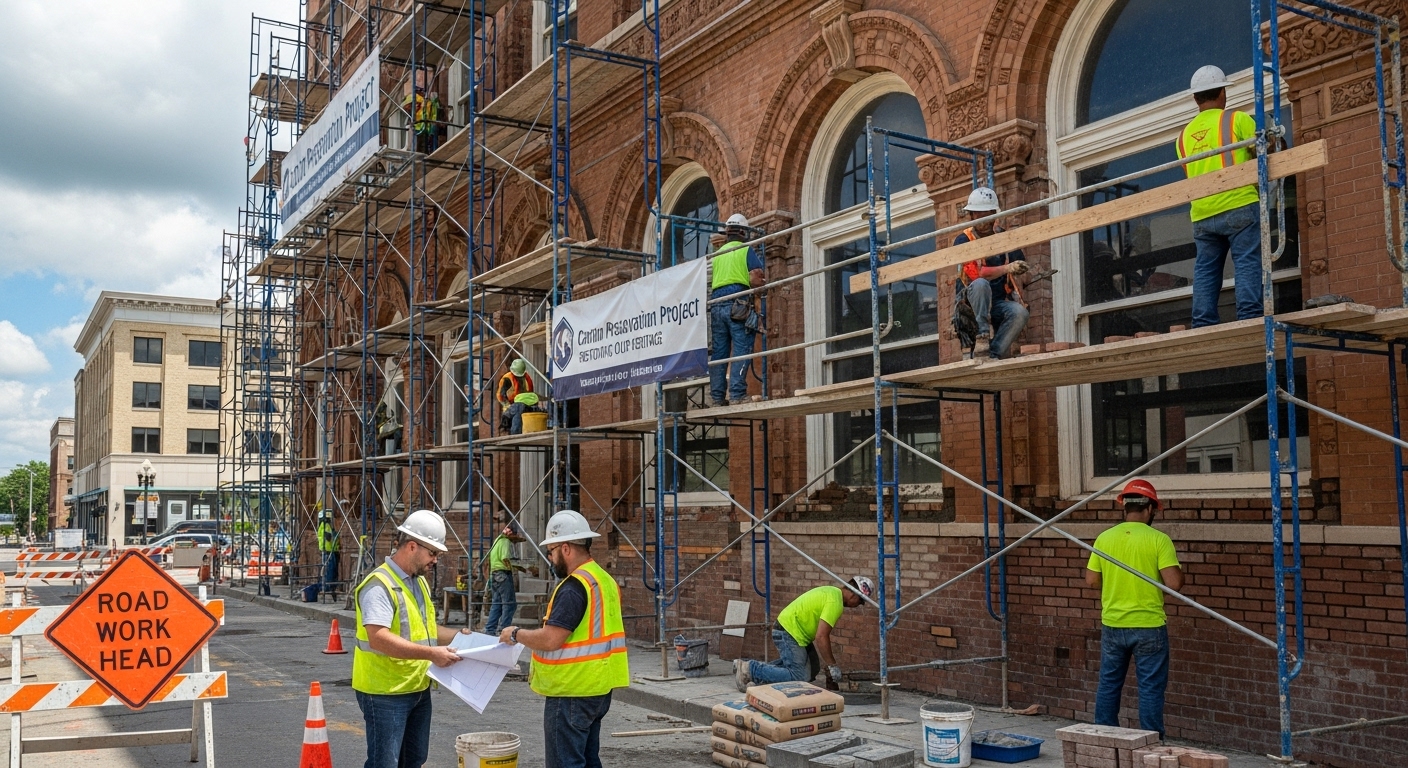
The Weight of the Old Brick
Have you ever walked through downtown Canton, maybe near the Palace Theatre, and just felt the history in the air? There’s something about the way the sun hits those weathered brick facades and ornate cornices that makes modern “cookie-cutter” construction feel a bit… empty.
If you’re lucky enough to own a piece of that history—whether it’s a century-old Victorian in Ridgewood or a commercial space with original masonry—you know the feeling. It’s a mix of immense pride and, if we’re being honest, a little bit of “what have I gotten myself into?”
Restoring a piece of the past isn’t like a standard weekend DIY project. It’s a labor of love that requires a different mindset. You aren’t just a homeowner; you’re a steward. But here’s the struggle: do you go for a full-blown historic restoration, a modern renovation, or a “preservation” approach?
Before you start swinging a sledgehammer, let’s talk about the paths you can take. If you’re already worried about the structural side of things, checking out historic masonry restoration in Canton is a great place to start. But for now, let’s look at the big picture of historic building restoration in Canton, Ohio.
Three Ways to Handle an Old Soul: Restoration, Renovation, and Preservation
When we talk about “fixing up” an old building, we often use these words interchangeably. But in the world of professional craftsmanship, they mean very different things.
Historic and commercial properties in Canton, OH require precision craftsmanship to maintain both structural integrity and original character. Our expert finish carpentry services ensure that detailed woodwork, trim, and interior features are restored or recreated with accuracy, preserving the authentic look of older buildings while improving durability and function.
For larger structures and business properties, our commercial building restoration services focus on repairing, strengthening, and modernizing aging buildings while maintaining their original architectural value. This approach helps property owners extend building life while meeting current safety standards.
Successful restoration projects also depend on following proven methods. Our guide to best practices for historic renovation outlines key strategies for material selection, structural assessment, and preservation techniques used in professional restoration work.
Long-term protection of heritage properties requires proper planning and execution. Our approach to historic building preservation helps ensure that historic structures across Ohio remain stable, functional, and true to their original design for future generations.
1. Historic Restoration
The goal here is to make the building look exactly like it did at a specific point in time. If that window was originally made of white oak with a specific crown molding, you recreate it.
- Pros: It’s the ultimate way to honor the home’s history. It increases the “soul” of the house and can qualify you for specific best practices for historic renovation tax credits.
- Cons: It’s expensive and slow. Finding 100-year-old materials or craftsmen who can replicate them isn’t easy.
- Best for: Buildings with significant architectural importance or homeowners who are purists at heart.
2. Modern Renovation (Adaptive Reuse)
This is where you keep the “vibe” but update the function. Think of a historic warehouse being turned into luxury lofts. You might keep the exposed brick but put in a gourmet kitchen and smart home tech.
- Pros: You get the charm of the old with the comfort of the new. It’s often much more “livable” for a modern family.
- Cons: You might lose some of the original character that made the building special in the first place.
- Best for: Families who love old houses but want a small bathroom remodeling Ohio that actually fits a modern shower.
3. Preservation
Preservation is all about “stabilizing.” You aren’t trying to make it look new; you’re just trying to make sure it doesn’t get any worse. It’s about maintenance and preventing decay.
- Pros: Most cost-effective way to protect the property. Prevents the “point of no return” for old structures.
- Cons: It doesn’t necessarily improve the aesthetics or modernize the building.
- Best for: Homeowners on a budget who want to historic building restoration in Canton slowly over time.
Side-by-Side: Which Path Fits Your Budget and Vision?
| Feature | Restoration | Renovation | Preservation |
| Primary Goal | Historical Accuracy | Modern Utility | Stopping Decay |
| Cost Level | High (Custom work) | Medium-High | Low-Medium |
| Material Use | Period-correct only | Modern alternatives | Original (whenever possible) |
| Timeline | Long / Slow | Moderate | Ongoing |
| Curb Appeal | Authentic Vintage | Updated Classic | Weathered / Maintained |
Expert Recommendations: My “Two Cents” on Canton Homes
Look, I’ve seen people try to turn a historic Victorian into a minimalist “modern farmhouse” with gray vinyl flooring. Honestly? It usually looks weird. The house fights back.
If you’re in Canton, my recommendation is usually a hybrid approach.
- Keep the “Skin” Historic: Restore the masonry, the original windows (if they’re salvageable), and the front porch. This maintains the neighborhood’s value and your home’s integrity.
- Modernize the “Guts”: Don’t try to live with 1920s electrical. It’s a fire hazard. We often help clients with electrical panel upgrade Ohio projects because you need to power 2026 tech, not 1926 lamps.
- Respect the Masonry: Canton has some of the best brickwork in the state. If you need repointing, hire someone who knows how to use lime-based mortar. Modern portland cement is too hard for old bricks and will actually cause them to crack.
Decision Framework: How to Choose Your Move
Still not sure which way to go? Ask yourself these four questions:
- Is the building in a Historic District? If yes, your choices might be limited by local ordinances. You’ll need to follow strict restoration guidelines for anything visible from the street.
- What is your “Forever” timeline? If you’re flipping, renovation is the way. If you’re passing this down to your grandkids, restoration or high-level preservation is the better investment.
- Does the “Under-the-Hood” work? If you have galvanized pipe replacement cost concerns, your budget needs to go there first before you worry about period-correct wallpaper.
- Can you find the right crew? You need a team that speaks “old house.” A standard contractor might see a “problem” where a restoration expert sees an “opportunity.”
FAQ: Restoring the Past in Canton
Is restoration always more expensive than building new?
Usually, yes. Building new is a known quantity. Restoration involves peeling back layers of the unknown. But, you can’t “build” the character of a 100-year-old oak floor.
Can I make a historic building energy efficient?
Absolutely. You don’t have to freeze in the winter. We often work on insulation energy efficiency upgrades Massillon OH that use modern “hidden” techniques to seal up old drafts without changing the look of the rooms.
Where do I find original-style materials in Canton?
There are local architectural salvage yards, but often, we have to custom-mill wood to match the original profiles. It’s worth the extra effort.
Leaving Your Mark on History
Restoring a historic building in Canton is about more than just equity. It’s about being a part of the city’s story. When you take a crumbling piece of our local history and breathe life back into it, you’re making the whole community better.
It’s messy. It’s sometimes frustrating. But that moment when you strip away layers of paint and find the original wood grain underneath? Or when you finish commercial building restoration in Canton and see a new business thrive in a space that was once abandoned? That’s why we do this.
If you’re standing in an old building right now, looking at the ceiling and wondering where to start, give us a shout. We love the “old stuff” as much as you do. Contact us for a consultation, and let’s figure out how to preserve your piece of the past for the future.
Would you like me to help you research if your property is currently eligible for any state or federal historic tax credits?