
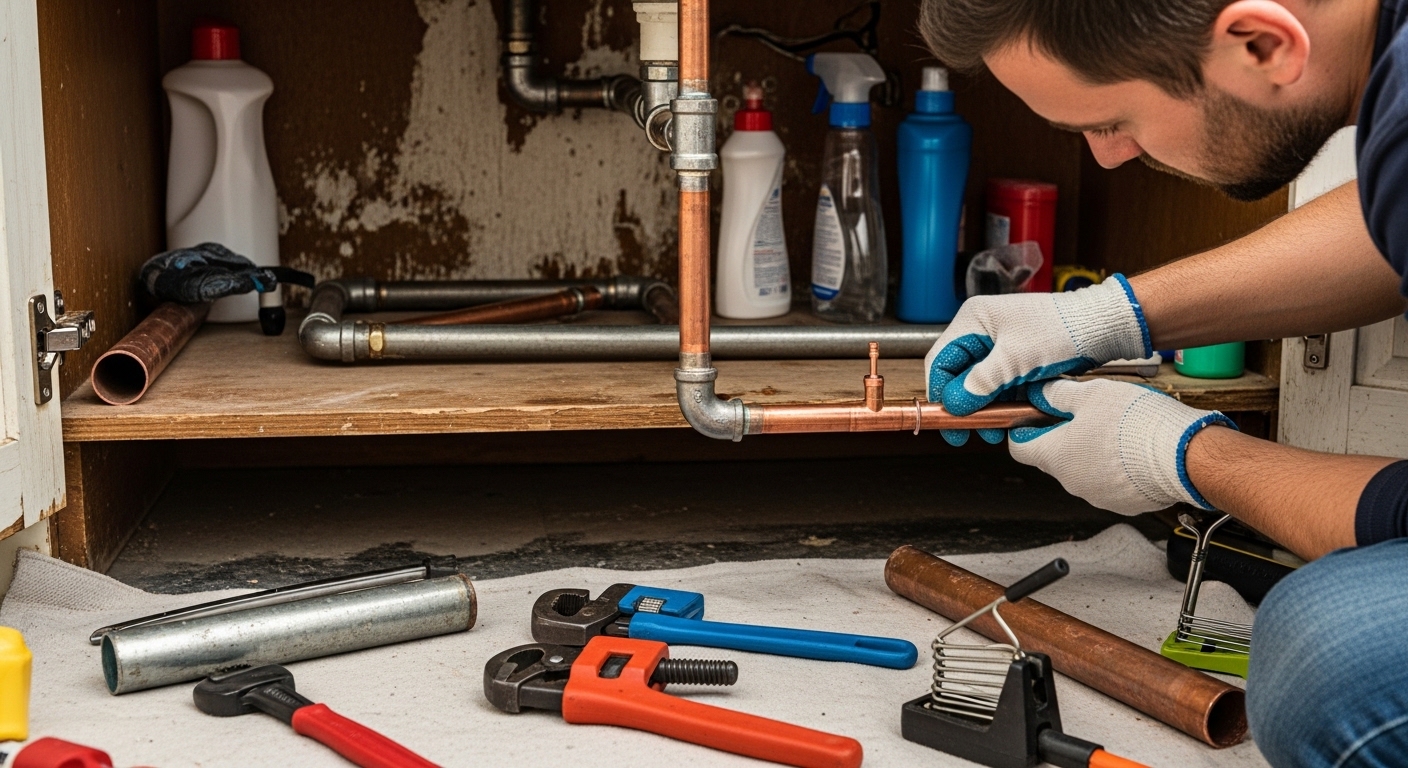
If your Ohio home was built before 1970, there is a good chance galvanized steel pipes are still running through your walls. For decades, these pipes were the standard choice for residential plumbing — but time has not been kind to them. Galvanized pipes corrode from the inside out, restricting water flow, contaminating drinking water with rust, and eventually failing altogether. The question most Ohio homeowners face is not if they need to replace their galvanized pipes, but when — and how much it will cost.
Whether you are in Massillon, Canton, or anywhere across Stark County, this guide covers everything you need to know: replacement costs, warning signs, material options, insurance implications, and frequently asked questions. If you suspect your home has aging galvanized plumbing, our plumbing services in Massillon, OH team is ready to help with a free, no-pressure estimate.
How Much Does Galvanized Pipe Replacement Cost in Ohio?
The cost of galvanized pipe replacement in Ohio varies significantly based on whether you are replacing a single problem area or repiping your entire home. Here is a realistic breakdown of what to expect:
Partial Replacement (One Area): $500–$2,000 If only one section of your plumbing system is failing — such as pipes beneath a bathroom or in a basement utility area — a partial replacement is often the most affordable first step. This is common when a home inspection flags a localized issue or when a specific fixture is experiencing chronic low pressure or leaks.
Whole-Home Repipe with Copper: $8,000–$20,000+ Copper is the premium choice for whole-home repiping. It is long-lasting, compatible with most fixtures, and well-regarded by insurance providers. For larger homes or properties with complex plumbing layouts, costs can push well above $20,000 once labor and permit fees are factored in.
Whole-Home Repipe with PEX: $5,000–$15,000+ PEX (cross-linked polyethylene) has become the go-to material for whole-home repiping across Ohio. It is significantly less expensive than copper, faster to install, and performs exceptionally well in freeze-thaw conditions — a critical advantage for Ohio winters. Most Stark County homeowners choosing a full repipe today are opting for PEX.
Key Factors That Affect Your Final Cost:
- Home size and number of fixtures — More bathrooms, kitchens, and utility connections mean more pipe runs and higher labor hours.
- Pipe accessibility — Pipes buried in concrete slabs or running through finished walls require more work to access and restore.
- Permit fees — Ohio municipalities require permits for repiping work. In Stark County, permit fees typically add $150–$500 to the overall project cost.
- Extent of corrosion — Severely corroded pipes that have caused water damage to surrounding materials may require additional repairs beyond the piping itself.
Free estimates are available for homeowners in Massillon and Stark County. If your home is also due for broader updates, consider bundling your plumbing replacement with our home remodeling services in Massillon, OH to save on combined labor costs.
Signs You Have Galvanized Pipes in Your Ohio Home
Not sure whether your home has galvanized pipes? Here are six telltale signs that should prompt you to call a licensed Ohio plumber for an inspection.
Your home was built before 1970. Galvanized steel was the standard residential pipe material from the early 1900s through the late 1960s, so any home constructed before 1970 is a strong candidate for aging galvanized plumbing — even if it has never caused a visible problem yet.
Low water pressure at multiple fixtures. As galvanized pipes corrode internally, mineral deposits and rust accumulate on the pipe walls, progressively narrowing the diameter and restricting flow — if you are noticing weak pressure at the shower, kitchen faucet, and outdoor spigot simultaneously, galvanized corrosion is a likely cause.
Rust-brown or yellowish water. Discolored water coming from your taps — especially after the water has been sitting unused overnight — is a sign that rust is leaching directly from corroded pipe walls into your water supply.
Visible corrosion or scaling on exposed pipes. If you can see your pipes in a basement, crawlspace, or utility room, look for white mineral scaling, reddish-brown rust stains, or a rough, pitted surface texture — healthy pipes should appear relatively smooth and uniform.
Frequent leaks at pipe joints. Galvanized pipes are threaded together at joints, and these connections are the first places corrosion creates weak points — if you are calling a plumber repeatedly for small leaks at joints, the problem is systemic, not isolated.
A plumbing inspector flagged galvanized during a home inspection. Home inspectors in Ohio are trained to identify galvanized plumbing and flag it as a material concern, particularly in pre-1970 homes — if your inspection report mentions galvanized pipes, take it seriously even if no active problems are visible yet.
If you are seeing multiple signs from this list, do not wait for a pipe to fail catastrophically. A whole-home repipe completed proactively is far less costly and disruptive than emergency water damage repairs. Our team also handles residential rehabilitation in Massillon, OH for homes that have already experienced water damage from failing galvanized systems.
Galvanized vs. Copper vs. PEX — What Should You Replace With?
Once you have decided to replace your galvanized pipes, the next question is: what material should you use? Here is an honest comparison of your two primary options.
Copper Pipe Copper has been used in residential plumbing for over 70 years and remains a trusted, proven material. It is highly durable, resistant to bacteria growth, and compatible with virtually all fixtures and appliances. Some Ohio homeowners insurance providers also view copper favorably when underwriting policies. The trade-off is cost — copper is significantly more expensive than PEX, both in material price and installation labor, since copper requires soldering at every joint.
PEX Pipe PEX has rapidly become the preferred choice for whole-home repiping across Ohio, and for good reason. It is flexible, which means fewer fittings and faster installation. It is highly resistant to freeze damage — a major advantage in Ohio’s climate, where winter temperatures can drop well below freezing and cause rigid pipes to crack. PEX is also much more affordable than copper, making whole-home repiping accessible for more budgets.
Our Recommendation: PEX for Most Ohio Homes For most homeowners in Massillon and Stark County, PEX is the smarter investment. It delivers excellent long-term performance, handles Ohio’s freeze-thaw cycles without issue, installs faster (which reduces labor costs), and costs considerably less than copper without meaningful sacrifice in durability or water quality. Unless your insurance policy specifically requires copper or you have a strong preference, PEX is the right choice for Ohio’s climate and most residential budgets.
Does Insurance Cover Galvanized Pipe Replacement in Ohio?
This is one of the most common questions Ohio homeowners ask — and the answer requires some nuance.
In most cases, Ohio homeowners insurance does NOT cover proactive galvanized pipe replacement. Replacing aging pipes because they are old or corroded is considered routine maintenance, and standard homeowners policies exclude maintenance-related expenses. You cannot file a claim simply because your pipes are galvanized and you want to replace them before something goes wrong.
However, insurance may cover sudden water damage caused by a failing galvanized pipe. If a corroded pipe suddenly bursts and floods your basement, your policy’s dwelling coverage may pay for the resulting water damage — but typically not the cost of replacing the pipes themselves.
There is an important catch: some Ohio insurance policies contain exclusions for damage caused by known pre-existing conditions. If your insurer can demonstrate that you were aware of failing galvanized pipes and did not address them, they may attempt to deny or reduce your claim. This makes proactive replacement not just a health and comfort issue, but potentially a financial protection issue as well.
Our recommendation: Before scheduling a replacement, call your Ohio homeowners insurance provider directly. Ask specifically whether your policy covers sudden water damage from galvanized pipes, whether there are any exclusions for known galvanized plumbing, and whether replacing your pipes with copper or PEX would affect your premium. Every policy is different, and getting clarity before the work begins can save you significant stress later.
Frequently Asked Questions
Q: How long does it take to replace galvanized pipes in an Ohio home?
The timeline depends on the scope of work. A partial replacement in one area of the home typically takes one to two days. A whole-home repipe for an average-sized Ohio home generally takes two to five days, depending on the number of fixtures, pipe accessibility, and whether walls need to be opened and repaired. Your plumber should give you a clear timeline estimate before work begins.
Q: Is galvanized pipe dangerous in Ohio homes?
Yes, it can be. As galvanized pipes corrode internally, rust and heavy metals — including lead, which can leach from the zinc coating over time — can enter your drinking water. This is a particular concern in homes with young children or pregnant women. Beyond water quality, severely corroded pipes are prone to sudden failure, which can cause significant water damage. If your home has galvanized pipes, having them inspected by a licensed Ohio plumber is an important step for both health and home safety.
Q: Does replacing galvanized pipes increase home value?
Yes, in most cases it does. Updated plumbing is a significant selling point for Ohio home buyers, particularly in older neighborhoods where galvanized pipes are common. A home with a modern PEX or copper plumbing system commands stronger offers and is less likely to have deals fall through due to inspection findings. Many real estate agents in Stark County will tell you that flagged galvanized pipes are one of the most common deal-breakers in home sales — replacing them proactively removes that obstacle entirely.
Q: Will insurance cover my galvanized pipe damage in Ohio?
It depends on your specific policy and the nature of the damage. Sudden, accidental water damage from a burst galvanized pipe may be covered under your dwelling or personal property coverage, but proactive replacement is almost never covered. Some policies also exclude damage from known pre-existing conditions. Call your insurer before filing a claim or scheduling work — and document the condition of your pipes with photos if you suspect a failure is imminent.
Q: What is PEX pipe and is it better than copper?
PEX stands for cross-linked polyethylene, a flexible plastic piping material that has become widely used in residential plumbing across the United States. It is not “better” than copper in every scenario — copper has a longer track record and is preferred by some insurers — but for most Ohio homeowners, PEX offers the best combination of performance, cost, and freeze resistance. It is easier to install (no soldering required), less expensive, and handles Ohio’s cold winters better than rigid copper or CPVC. For whole-home repiping in Massillon and Stark County, PEX is what we recommend for the majority of our clients.
Ready to Get a Free Estimate in Massillon or Stark County?
Galvanized pipe replacement is a significant investment — but it is one that protects your family’s health, prevents costly water damage, and adds real value to your home. Whether you need a partial repair or a complete whole-home repipe, our licensed Ohio plumbers are ready to assess your situation and give you an honest, transparent estimate.
Explore our plumbing services in Massillon, OH to learn more about what we offer, or reach out today to schedule your free on-site evaluation. For homes needing broader restoration work alongside plumbing upgrades, our residential rehabilitation services in Massillon, OH provide a comprehensive solution under one roof.