
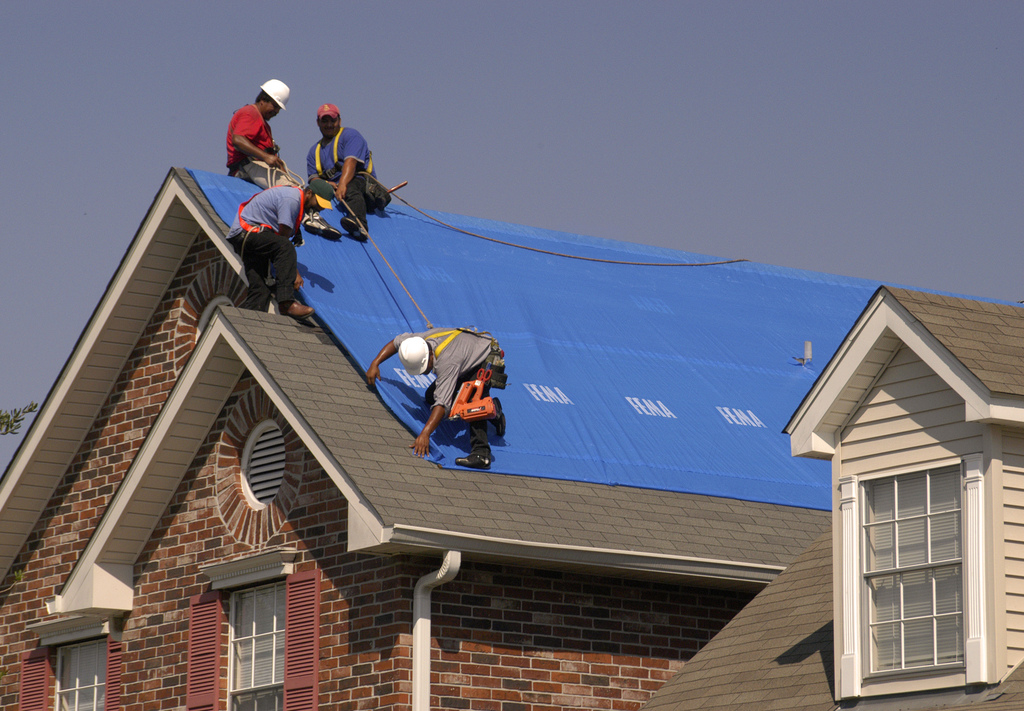
If a storm just tore through your neighborhood and left a gaping hole in your roof, you don’t have time to shop around. Emergency roof tarping is one of those services where most homeowners have no idea what it should cost — until they’re handed a bill that doesn’t feel right. This guide breaks down exactly what emergency roof tarping costs in Ohio, what drives the price up or down, and how to make sure you’re not getting taken advantage of when you’re most vulnerable.
What Is Emergency Roof Tarping?
Emergency roof tarping https://kandkconstructionoh.com/ is a temporary protective measure applied to a damaged roof to prevent water, wind, and debris from entering your home while permanent repairs are arranged. A heavy-duty polyethylene tarp is secured over the damaged area using wood battens, screws, or weighted fasteners to hold it in place until a full repair or replacement can be completed.
It is not a permanent fix. It is a bridge — designed to buy you days or weeks of protection while insurance claims are processed and contractors are scheduled. In Ohio’s unpredictable weather, a properly installed tarp can mean the difference between a $15,000 roof repair and a $60,000 interior reconstruction.
Average Emergency Roof Tarping Costs in Ohio
Pricing varies based on damage size, roof pitch, time of call, and contractor. Here is what Ohio homeowners can realistically expect to pay in 2025:
Small tarp job (up to 10×10 feet) — $150 to $350 Covers minor storm damage such as a few missing shingles, a small puncture from a fallen branch, or isolated flashing failure. Typically completed in under two hours by one or two workers.
Medium tarp job (10×20 to 20×20 feet) — $350 to $700 The most common scenario after a typical Ohio hailstorm or wind event. Covers a moderate section of damaged roofing on a standard-pitch residential roof.
Large tarp job (20×30 feet or more) — $700 to $1,500 Necessary after significant storm damage, partial roof collapse, or tornado-adjacent wind events. May require multiple tarps, additional fastening, and a larger crew.
Whole-roof emergency tarping — $1,500 to $3,500+ Rare but necessary after catastrophic events such as a tree falling through the entire roof span, fire damage, or a direct tornado strike. Full-roof coverage requires industrial-grade materials and significant labor.
After-hours and weekend emergency premium — add $150 to $500 Most Ohio tarping companies charge a significant upcharge for calls that come in evenings, weekends, or holidays. This is standard in the industry — emergency availability has a cost.
What Factors Drive the Cost Up or Down
Understanding what goes into a tarping quote helps you evaluate whether the number you’re being given is fair.
Roof pitch and complexity A low-slope or flat roof is far easier and safer to work on than a steep 8/12 or 10/12 pitch. Steep roofs require additional safety equipment, slow down the crew, and increase labor time significantly. Expect a 20 to 40 percent premium on steep-pitch roofs.
Damage size and location https://kandkconstructionoh.com/Damage near the ridge or on a multi-level roof section requires more maneuvering and material overlap to achieve a watertight seal. A simple hole in the middle of a single-story ranch takes far less time than damage spanning a two-story colonial’s upper section.
Time of call Daytime business hours will always get you the best rate. Evening calls, middle-of-the-night emergencies, and weekend requests all carry premium pricing. If the storm hits at 2 AM on a Saturday, expect to pay more — that’s the reality of emergency services.
Tarp quality and material There is a significant difference between a light-duty blue poly tarp from a hardware store and a professional-grade reinforced polyethylene tarp. Reputable Ohio contractors use 6-mil or heavier tarps that can withstand Ohio wind and rain for weeks. Cheap tarps fail quickly, especially in winter, and can cause additional damage. Make sure your contractor is using heavy-duty material.
Fastening method Proper tarping involves securing the tarp with wood battens (1×4 or 2×4 boards) screwed into the roof deck to prevent wind uplift. Some contractors simply throw a tarp and weight the edges — this is inadequate in Ohio’s wind conditions and should be reflected in a lower price. Ask specifically how the tarp will be fastened before agreeing to the job.
Travel distance If you’re in a rural area of Ohio — say, outside Chillicothe, Findlay, or Zanesville — expect higher costs due to travel time and fuel. Urban markets like Columbus, Cleveland, Cincinnati, and Akron have more competition and typically lower base rates.
Storm saturation Immediately after a major storm event, local contractors are overwhelmed with calls. This drives prices up temporarily due to demand. If your damage is not actively letting in water, waiting 24 to 48 hours after a major storm event to call can sometimes get you a more competitive price.
Does Homeowners Insurance Cover Emergency Roof Tarping in Ohio?
In most cases, yes — but with important conditions.https://kandkconstructionoh.com/
Most standard Ohio homeowners insurance policies cover emergency tarping as part of the “mitigation of further damage” obligation. When a covered peril (wind, hail, storm) damages your roof, your insurer expects you to take reasonable steps to prevent additional damage from occurring. Emergency tarping is considered exactly that kind of reasonable preventive measure.
What this means in practice:
Your insurance company will typically reimburse emergency tarping costs when the tarping is directly related to a covered storm event, you file your claim promptly and include the tarping receipt, the tarping contractor provides an itemized invoice, and you use a licensed and reputable contractor rather than an unreasonably priced one.
Important caveats:
The reimbursement is subject to your deductible. If your deductible is $1,000 and the tarp job cost $400, you will likely not receive separate reimbursement — the cost will simply be applied toward your overall claim. Additionally, some Ohio policies have language requiring you to notify your insurer before authorizing major emergency work. Read your policy or call your agent before the contractor starts, if at all possible.
Keep every receipt, photograph the damage before and after the tarp is installed, and get an itemized written invoice from your contractor. This documentation is essential for claim reimbursement.
What a Legitimate Emergency Tarping Invoice Should Include
If you are handed a bill that lacks detail, ask for a proper itemized invoice before paying. A legitimate contractor’s invoice should include the following:
The contractor’s full company name, Ohio license number, and insurance information. The date and time of service. A description of the damage area covered and approximate square footage. The tarp size and grade (thickness in mils) used. The fastening method used (battens, screws, or other). Labor hours and hourly rate or flat-rate charge. Any after-hours or emergency premium clearly labeled. A total cost with all fees broken out.
This level of documentation protects you during the insurance claim process and gives you recourse if the work is later found to be substandard.
Emergency Tarping Scams to Watch For in Ohio https://kandkconstructionoh.com/
Ohio’s major storm corridors — from the I-70 corridor to the Lake Erie snowbelt — attract storm-chasing contractors after every significant weather event. Here are the most common tarping scams Ohio homeowners encounter:
Grossly inflated pricing Some out-of-state contractors charge $3,000 to $5,000 for a basic tarp job that should cost $400. If a quote feels dramatically out of line with the ranges in this guide, get a second opinion before signing anything. The urgency you feel is real, but a few phone calls can save you thousands.
Tarp-and-disappear operations Some contractors install a cheap, inadequately fastened tarp, collect payment, and are never heard from again. When the tarp blows off in the next wind event and causes additional interior damage, you have no recourse. Always verify a contractor’s physical address, phone number, and online reviews before paying.
Assignment of Benefits pressure Some contractors will present you with an Assignment of Benefits form alongside the tarping agreement. This document transfers your insurance rights to the contractor, giving them direct control over your entire claim. Never sign an AOB under pressure, especially for emergency tarping. It can severely complicate your claim and is a tactic primarily used by contractors with poor reputations.
Upfront full payment demands Reputable contractors typically request payment after the work is completed and you have verified it to your satisfaction. A contractor demanding full upfront cash payment for emergency services should be viewed with caution.
Deductible waiver offers If a contractor offers to waive your insurance deductible in exchange for signing with them, walk away. This constitutes insurance fraud under Ohio law and exposes both the contractor and the homeowner to legal liability.
How to Find a Reputable Emergency Tarping Contractor in Ohio
When your roof has a hole in it and rain is coming, you need to move fast — but not recklessly. Here is how to find a trustworthy contractor quickly:
Start with your homeowners insurance company. Most Ohio insurers have emergency contractor networks and can refer you to vetted local providers immediately. Call your regular roofing contractor if you have one. Many established Ohio roofing companies offer emergency tarping as a service for existing and new clients. Ask neighbors who they have used. After major storms, neighborhood social media groups and apps like Nextdoor fill up with contractor recommendations and warnings within hours. Check the Ohio Construction Industry Licensing Board website to verify any contractor’s license status before agreeing to work. Look for Google reviews with photos and verified purchase tags — these are harder to fake than anonymous five-star ratings.
DIY Emergency Tarping: Is It Safe?
After a storm, some Ohio homeowners attempt to tarp their own roofs to save money. This is understandable but carries real risks.
The safety risk is significant. Wet roofs are extremely slippery. Post-storm conditions often include wet decking, broken materials underfoot, and potentially compromised structural sections you cannot see from the surface. Falls from roofs are one of the leading causes of serious injury and death in home improvement work.
The quality risk is also real. A poorly installed tarp — one that isn’t properly fastened with battens or that doesn’t extend far enough over the ridge — will fail in the next wind event. A failed tarp can cause more interior water damage than no tarp at all if it channels water into the home rather than away from it.
If you are physically capable, have roofing experience, and the pitch is manageable, a temporary tarp installation on a single-story home can be done safely with the right materials. However, for anything above one story, steep-pitch roofs, or if you have any doubt about your ability to work safely at height, call a professional.
How Long Can a Tarp Stay on a Roof?
Emergency tarps are temporary by design. In Ohio conditions, here is what to realistically expect:
A properly installed heavy-duty tarp should hold reliably for two to six weeks under normal Ohio weather conditions. In summer, UV exposure degrades polyethylene tarps faster than many homeowners realize — a tarp that was fine after three weeks may begin deteriorating rapidly by week five. Ohio winters add additional stress from snow loads, ice, and freeze-thaw cycling. A tarp installed in November may be in poor condition by February.
The general rule is to treat a tarp as a 30-day solution and pursue permanent repairs as quickly as possible. If your insurance claim is delayed and repairs are taking longer than expected, ask your contractor to inspect and re-secure the tarp at the 30-day mark.
Final Thoughts https://kandkconstructionoh.com/
Emergency roof tarping in Ohio is a necessary service that most homeowners will need at least once over the life of their home. The cost is real, the urgency is real, and unfortunately the potential for exploitation is also real — especially in the immediate aftermath of a major storm.
Know the fair price ranges before disaster strikes. Keep your insurance agent’s number in your phone. Have the name of at least one trusted local roofing contractor saved before you ever need it. And when the storm does hit, move methodically — document the damage, call a vetted contractor, contact your insurer, and don’t let panic push you into a decision you’ll regret.
A good emergency tarp buys you the time to make a smart, informed decision about permanent repairs. Use that time wisely.