
The Midnight Bucket Brigade
It’s 2:00 AM on a Tuesday. You’re finally in that deep, glorious sleep when you hear it. Drip. Drip. Plunk. At first, you try to convince yourself it’s just the house settling. But then you hear it again, followed by the unmistakable sound of water hitting your hardwood floors. You scramble out of bed, grab the nearest pasta pot, and spend the next hour playing a frantic game of “catch the leak.”
Honestly, it’s one of the most helpless feelings you can have as a homeowner. You’re tired, you’re frustrated, and you know that every drop of water is potentially eating away at your ceiling or your insulation. I’ve been there—standing in the dark with a flashlight, wondering if the whole roof is about to give up the ghost.
The thing is, you can’t exactly call a roofing crew to your house in the middle of a torrential downpour. They can’t get on the roof safely while it’s slick and the wind is howling. So, what do you do? You find a way to stop a roof leak temporarily to buy yourself some time.
Transitioning from Panic to Action
Once you’ve caught the water in a bucket, the panic usually subsides just enough for you to think. But don’t just leave that bucket there and hope for the best. A roof leak is like a check engine light—it’s telling you something is wrong, and ignoring it will only lead to a much more expensive roof leak emergency repair in Ohio.
Understanding how to manage a leak in the short term is about “damage control.” We aren’t trying to fix the roof forever right now; we’re just trying to keep your living room from becoming an indoor swimming pool.
Core Educational Content: The “Why” and “How” of Temporary Fixes
Finding the Source (The Detective Work)
Here’s a frustrating truth: where the water drips from your ceiling is almost never where the hole is in your roof. Water is sneaky. It hits the roof, travels down a rafter, finds a wire, follows that wire for six feet, and then finally drops onto your head.
To find the actual entry point, you’ll need to go into the attic with a flashlight. Look for dampness, “shimmering” wood, or dark stains. If the rain has stopped, look for watermarks or mold.
Common “Quick Fix” Methods
If it’s safe to go outside (and the roof isn’t too steep or wet), here are the tools homeowners usually reach for:
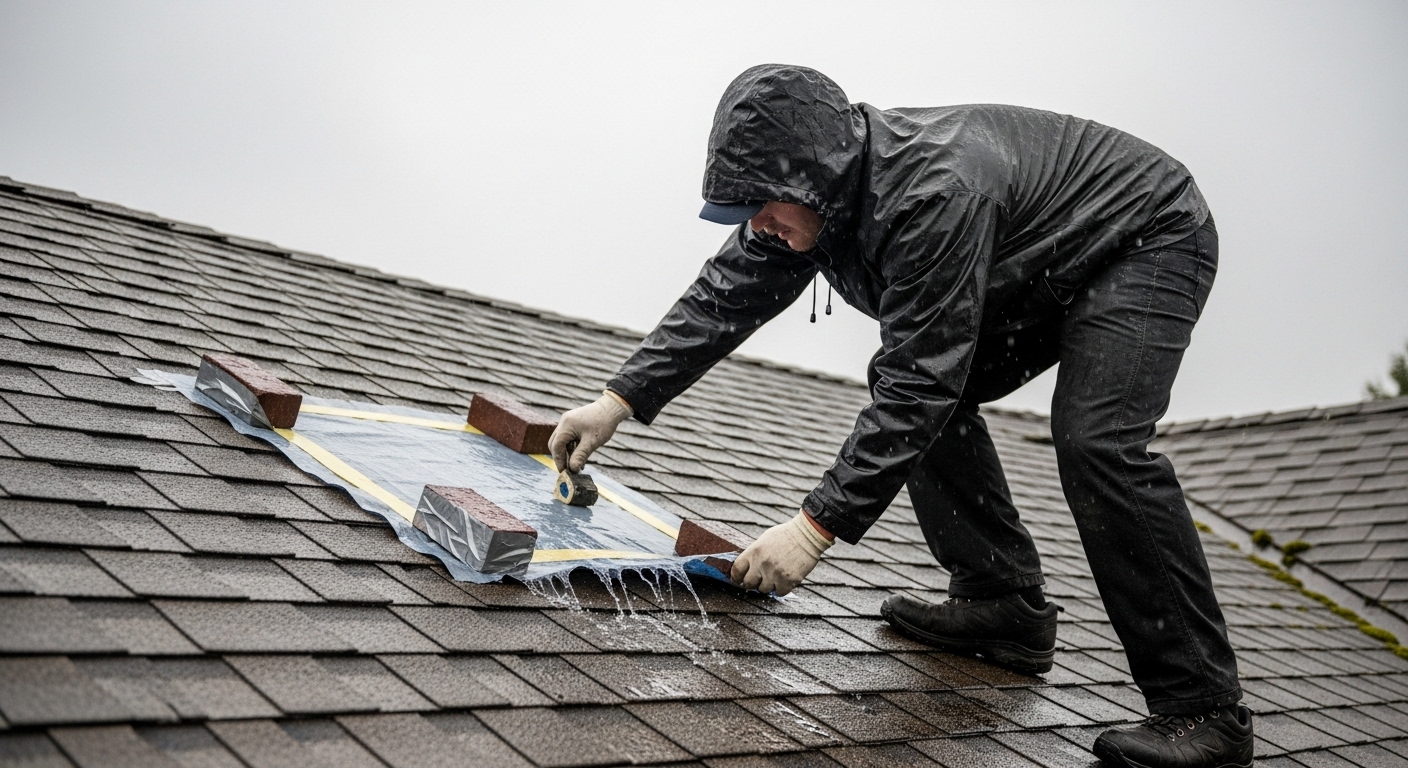
- The Tarp Method: This is the gold standard for temporary protection. You drape a heavy-duty tarp over the ridge of the roof so water can’t get under it, and you weigh it down with 2x4s (not nails—don’t add more holes!).
- Roofing Cement or Mastic: Think of this like “roofing caulk.” It comes in a tube or a can. You can smear it over a small crack or a lifting shingle. It’s messy, but it works surprisingly well in a pinch.
- The Plywood Patch: If you have a legitimate hole (maybe from a fallen branch), a piece of plywood covered in plastic can act as a shield until a pro arrives.
The Dangers of “DIY” Roofing
Look, I’m all for being handy, but roofs are dangerous. Every year, thousands of people get hurt falling off ladders. If the weather is still bad, or if the leak is in a spot you can’t reach safely, stay on the ground. Sometimes the best temporary fix is just a bigger bucket and a call to a professional.
If you’re worried about the long-term health of your home, it’s worth reading about the benefits of hiring professional roofers today to understand why some things are better left to the guys with the harness.
Expert Insights: What the Pros Want You to Know
I’ve talked to dozens of guys who have spent their lives on North Ohio roofs, and they all say the same thing: Don’t over-repair it.
When a homeowner tries to “fix” a leak with five cans of spray foam or a roll of duct tape, they often make the permanent repair much harder (and more expensive) for the contractor. The contractor has to scrape all that junk off before they can actually replace the shingles or flashing.
Another insider tip? Check your insurance. If the leak was caused by a sudden event—like a storm or a tree limb—your insurance might cover the repair. But they often require you to take “reasonable steps” to prevent further damage. Putting up a tarp counts as a reasonable step. Letting it drip for a week? Not so much.
If you’ve recently had a big storm, you might want to look at our guide on roof damage after storm Ohio to see if you should be filing a claim.
Practical Application: Your Emergency Checklist
If you discover a leak right now, follow these steps in order:
- Contain the water: Get a bucket. If the ceiling is bulging, take a small screwdriver and poke a hole in the center of the bulge. It sounds crazy, but it lets the water drain in a controlled way rather than letting the whole ceiling collapse from the weight.
- Move the “Good Stuff”: Get your electronics, rugs, and heirlooms out of the splash zone.
- Find the entry point: Use that flashlight in the attic.
- Tarp it (If safe): Cover the area from the ridge down past the leak.
- Call a Professional: Don’t wait for the next storm to see if your tarp holds.
FAQ: Quick Answers for Stressed Homeowners
Can I use duct tape to stop a roof leak? Honestly? No. Duct tape doesn’t stick well to wet, gritty shingles, and the sun will bake the adhesive onto your roof in about twenty minutes. Use roofing cement or a tarp instead.
How long will a tarp last on my roof? A well-secured tarp can last a few weeks, maybe even a month. But it’s not meant to handle heavy wind or snow. It’s a band-aid, not a cure.
Should I try to fix the leak from the inside of the attic? It’s almost impossible to stop a leak from the inside. You might stop the drip in one spot, but the water will just find another way around your patch. You have to stop the water before it gets into the wood.
Permanent Roof Repair Planning & Damage Documentation
Back to that 2:00 AM pasta pot. It’s a stressful way to spend a night, but now you have a plan. You aren’t just reacting; you’re managing.
A temporary fix is about protecting your peace of mind and your bank account while you wait for a permanent solution. Once the sun comes up and the rain stops, take a breath, look at your options, and remember that you’ve done the hard part—you kept the water out.
If you’re ready to move from “bucket brigade” to a permanent, dry ceiling, we’re here to help. We’ve seen every kind of leak Stark and Summit County can throw at us. Reach out to us for a real repair so you can get back to sleeping through the night without listening for the drip.
Would you like me to send you a list of the specific materials you should keep in your “Emergency Roofing Kit” just in case the next storm hits?