
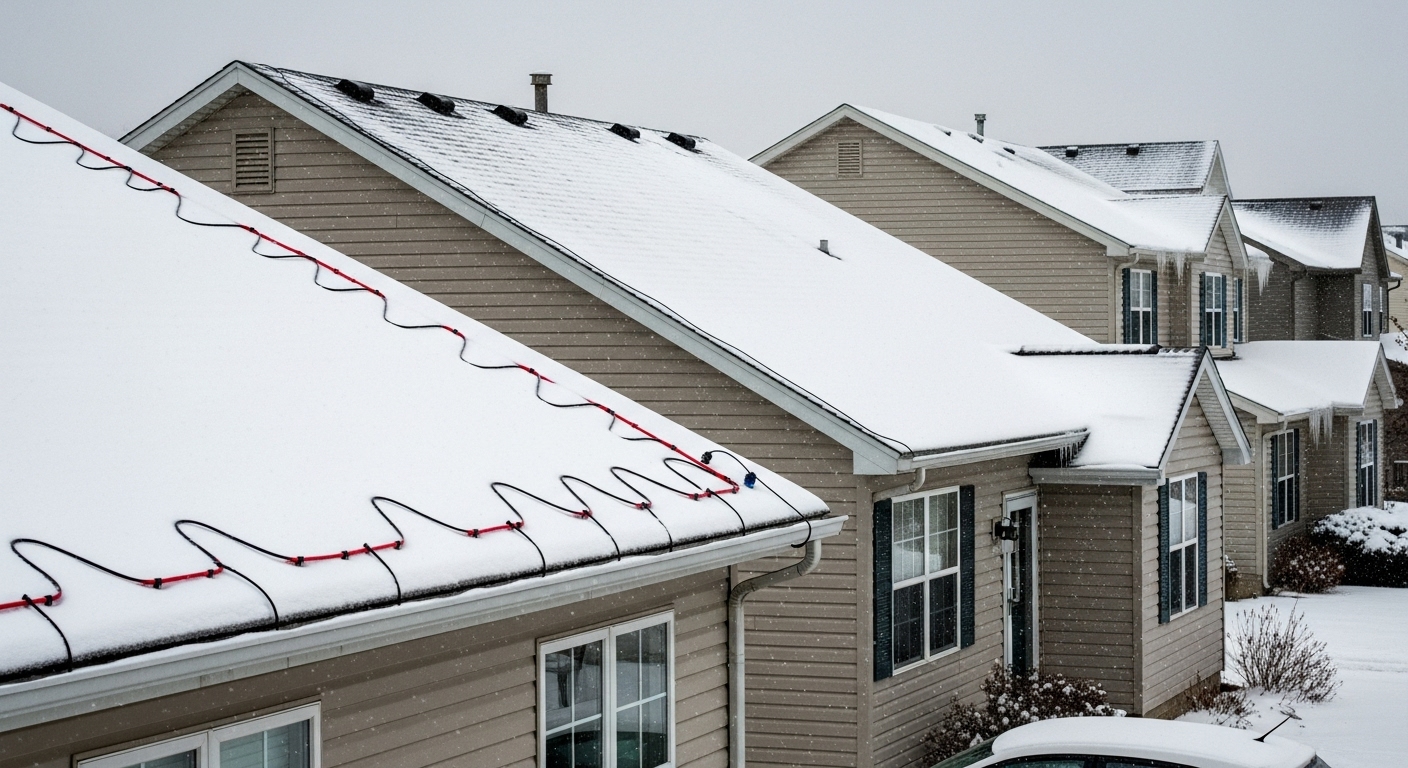
The Cold Truth About Those “Pretty” Icicles
You know that feeling when you’re pulling into your driveway after a long day, the heater in the truck is finally winning the battle against the Northeast Ohio chill, and you look up at your roof? Maybe you see those long, sparkling icicles hanging off the gutters. They look like something out of a Hallmark movie, right?
But honestly, every time I see those, my stomach drops just a little bit.
If you’re a homeowner around here—whether you’re in Akron, Canton, or up toward Cleveland—you’ve probably dealt with the winter “roof blues.” We get that perfect, messy cocktail of heavy lake-effect snow followed by a quick freeze, and suddenly, your gutters look like they’re growing teeth.
Here’s the thing: those icicles aren’t just ice. They’re a warning sign. They’re the visible part of an ice dam, and if you don’t get a handle on why they’re happening, you’re looking at soggy drywall, ruined insulation, and a whole lot of stress you just don’t need.
I want to walk you through exactly what’s happening up there, why our local weather makes it worse, and how we can actually fix it. If you’re already seeing leaks or just want to be ready for the next “Big One,” you can always check out our ice dam prevention tips for some quick help.
But for now, let’s grab a coffee and break down the five big reasons your roof is fighting against you this winter.
1. The “Hot Head” Problem: Heat Loss from Your Living Space
This is usually the biggest culprit. Think of your house like a person wearing a warm hat. If the hat has a hole in it, the heat from your head escapes. In your home, that heat rises into your attic.
When your attic gets too warm, it heats up the underside of your roof deck. The snow on top starts to melt—even if it’s 20 degrees outside! That meltwater runs down the roof until it hits the eaves (the part that sticks out past your walls). Since the eaves aren’t over the heated part of the house, they’re freezing cold. The water hits that cold spot, freezes instantly, and boom—you’ve got the start of a dam.
A Real-World Scenario: I remember visiting a house in Cuyahoga Falls where the owner had just finished a beautiful kitchen remodeling project. They’d added these gorgeous recessed lights. But they hadn’t sealed the “can” lights properly. Every time they cooked dinner, all that heat shot straight into the attic, melted the snow, and created a massive ice ridge that eventually leaked right back into their brand-new kitchen.
Pro Tip: Go up into your attic on a cold day. If it feels “toasty” or even just “mild,” you’re losing too much heat. It should feel pretty darn close to the temperature outside.
2. The “Swiss Cheese” Attic: Air Leaks and Bypass
Even if you have thick pink insulation, heat can still sneak past it. We call these “attic bypasses.” They’re the little gaps around plumbing stacks, chimneys, wire holes, and even your attic pull-down stairs.
These aren’t just tiny drafts; they’re like little chimneys pumping warm, moist air directly against the bottom of your roof. This doesn’t just cause ice dams; it can also lead to mold because that warm air hits the cold wood and creates condensation. It’s a double whammy of “no thank you.”
A Real-World Scenario:
I once saw a home where a bathroom exhaust fan was just venting into the attic instead of through the roof. Every time someone took a shower, they were basically steam-cleaning the underside of their roof. The ice dams that formed were so heavy they actually pulled the gutters right off the house.
Quick Insight: Most people think they need more insulation, but often they actually need better air sealing. You’ve got to plug the holes before you add the blankets.
3. Poor Ventilation: The Attic Needs to Breathe
This one feels counter-intuitive to a lot of people. “Why would I want cold air in my attic during a Canton winter?” Well, you want that cold air moving through so it can sweep away any heat that does escape from the house.
You need a balance of intake vents (usually under the eaves or soffits) and exhaust vents (at the peak of the roof). If your soffit vents are clogged with old insulation or bird nests, the air gets trapped. The attic stays warm, the snow melts, and the dam grows.
A Real-World Scenario:
We see this a lot in older homes in Stark County. Someone will blow in a ton of new insulation—which is great—but they accidentally cover up the soffit vents in the process. Suddenly, a house that never had ice dams is covered in them because the attic can’t breathe anymore.
Pro Tip: Look at your roof after a light frost. If you see areas where the frost has melted away in “patches,” those are your hot spots. If the frost is gone everywhere except the very edges, your ventilation is likely struggling.
4. Gutter Gunk: The Physical Barrier
Let’s be clear: Gutters don’t cause ice dams, but they definitely make them worse. If your gutters are full of maple helicopter seeds and oak leaves from the fall, the water has nowhere to go.
Instead of flowing through the downspout, the water sits in the gutter and freezes solid. This creates a foundation for the ice dam to build upon much faster. Once that gutter is a solid block of ice, any new snowmelt just piles up on top of it and starts working its way under your shingles.
A Real-World Scenario:
I worked with a homeowner who thought they had a major roof leak. Turns out, a single tennis ball was stuck in the downspout opening. The entire gutter system froze into a 200-pound ice spear. When it finally thawed, the water backed up so high it soaked the exterior wall.
Quick Insight: Clean those gutters in late November. I know it’s cold and messy, but it’s a lot cheaper than a roof leak emergency repair.
5. Complex Roof Geometry: Valleys and Dormers
Sometimes, it’s just the way your house was built. If you have a lot of “valleys” (where two roof sections meet) or dormers, snow tends to pile up in those spots. These areas are also harder to ventilate and insulate perfectly.
In Northeast Ohio, we get those drifting winds that can dump three feet of snow in a roof valley while the rest of the roof is almost bare. That concentrated snow pack is a prime target for melting and refreezing.
A Real-World Scenario:
Think about those beautiful “Cape Cod” style homes. They have those cute little windows (dormers) sticking out. Because the walls of those dormers are often under-insulated, the snow in the corners around them melts almost constantly. That’s why you’ll often see the worst icicles right next to the dormer windows.
Pro Tip: If you’re building an addition or a new home, try to keep the roof lines as simple as possible. It’s less “architectural,” but it’s a whole lot easier to maintain in our climate.
At-A-Glance: Why It’s Happening
| Cause | What’s actually happening? | The “Fix” |
| Heat Loss | Warm air rising into the attic melts snow. | Add insulation and check for “hot spots.” |
| Air Leaks | Holes/gaps let warm air bypass insulation. | Seal gaps around lights, pipes, and stairs. |
| Poor Venting | Warm air gets trapped under the roof deck. | Ensure soffit and ridge vents are clear. |
| Dirty Gutters | Debris traps water, which then freezes. | Clean gutters before the first big freeze. |
| Roof Shape | Snow accumulates in valleys and corners. | Use a roof rake to clear heavy snow. |
The “Oh No” Takeaways
If you’re reading this and looking at a wet spot on your ceiling, don’t panic. But don’t wait, either. Here’s the “short list” of what you need to know:
- Ice dams are a symptom, not the disease. The “disease” is a warm attic.
- Don’t beat the ice with a hammer. You’ll just destroy your shingles. If you have a massive dam, call a professional who uses steam.
- The “Pantyhose Trick” works in a pinch. Fill a leg of pantyhose with calcium chloride (not rock salt!) and lay it across the dam. It’ll melt a channel for the water to escape.
- Long-term fixes pay for themselves. Better insulation and sealing will lower your heating bills all winter, not just stop the dams.
Let’s Get Your Home Winter-Ready
Look, I know this stuff isn’t “fun” home improvement. It’s not as exciting as picking out new tile for a bathroom remodeling project. But keeping your “envelope” sealed is the best way to protect everything else inside.
If you’re worried about your roof or you’ve noticed some suspicious icicles starting to form, we’d love to help you take a look. Whether you need a quick inspection or you’re thinking about a more permanent residential rehabilitation to get your insulation and venting up to snuff, we’re right here in the neighborhood.
Give us a shout at K&K Construction. We’ve spent plenty of winters on Northeast Ohio ladders, and we know exactly how to keep your home dry and cozy. Let’s make sure those icicles stay in the movies and off your gutters!